Key Takeaways
- Understanding your dog’s natural behavior patterns around strangers is the foundation of a successful introduction.
- Preparing your dog in advance — through exercise, calm energy, and familiar routines — dramatically reduces anxiety during first meetings.
- Neutral territory and a slow, pressure-free approach are essential pet introduction strategies recommended by experts like Cesar Millan and the American Kennel Club.
- Reading your dog’s body language in real time helps you manage initial reactions before they escalate.
- Building a positive relationship between your dog and your boyfriend takes consistent effort, patience, and the right dog-friendly activities.
- Setbacks are normal — working with professional dog trainers or behaviorists can make a significant difference in challenging cases.
- Long-term partner-pet bonding and household harmony depend on clear boundaries, routines, and mutual respect from all parties involved.
22.3% of dogs show fear or anxiety toward unfamiliar people, according to a study of 43,517 dogs by the Dog Aging Project.
But when you share your home with a beloved dog, that introduction becomes a two-part event. Your dog is not just a pet — for many owners, they are a companion, a protector, and a deeply bonded family member. How that first meeting goes can set the tone for your dog’s long-term comfort and your relationship’s harmony. Whether your pup is a social butterfly or a cautious homebody, knowing how to introduce your dog to a new boyfriend the right way makes all the difference.
To successfully introduce a dog to a new boyfriend, start by understanding your dog’s unique behavior around strangers. Prepare them with exercise and calm energy beforehand, then arrange a neutral, pressure-free first meeting. Gradual exposure, positive reinforcement, and patience are the cornerstones of helping your dog and partner build a trusting, lasting bond.
Understanding Your Dog’s Behavior
How Dogs Perceive and React to New People?
Dogs experience the world primarily through scent, sound, and body language — and when a new person enters their environment, all three senses go on high alert. The American Kennel Club notes that dogs are highly attuned to human emotions and nonverbal cues. That means your own nervousness or excitement can directly shape how your dog responds. A dog that picks up on tension from its owner is far more likely to react with wariness, barking, or defensive posturing toward a stranger — even one who has done nothing threatening.
Dog behavior around strangers varies widely based on breed, past experiences, socialization history, and individual temperament. Some dogs are naturally gregarious and greet new people with enthusiastic tail wags and immediate trust. Others — particularly those with limited early socialization or a history of trauma — may growl, retreat, or become hypervigilant. Renowned dog behaviorist Cesar Millan frequently emphasizes that dogs live in the present moment and respond to the energy around them. Your dog is not being difficult or jealous when they react cautiously to your new boyfriend. They are simply doing what instinct and experience have taught them when their established world gets disrupted by an unfamiliar presence.
Why Dog Behavior Matters for Relationship Introductions?
Ignoring or misreading your dog’s behavioral signals during an introduction can create unnecessary stress for your pet — and an uncomfortable experience for your boyfriend. The ASPCA notes that dogs forced into uncomfortable social situations without adequate preparation are more likely to develop anxiety-based behaviors over time, including resource guarding, excessive barking, or even aggression. These are not signs of a “bad dog.” They are signs of a dog whose emotional needs were not considered during a significant change in their environment.
Knowing the difference between a curious, cautious dog and a genuinely fearful or reactive one is an important first step. Curious dogs tend to approach slowly, sniff extensively, and then relax. Fearful dogs may pin their ears back, tuck their tail, yawn excessively, or try to hide. Reactive dogs may lunge, bark aggressively, or show their teeth. Each response calls for a different level of management and preparation. Consulting with a professional dog trainer or certified behaviorist before the introduction is advisable, especially if your dog has a history of reactivity toward strangers or men specifically.
Preparing Your Dog for the Introduction
Setting the Stage Before the First Meeting
Preparation is the single most underestimated part of a successful pet introduction. Many people assume that bringing two parties into the same room is enough — but dogs thrive on predictability and routine. Any disruption to their established world, including a new person who suddenly starts appearing regularly, can trigger stress responses that make everything harder. A few intentional steps taken days or even weeks beforehand can seriously reduce your dog’s anxiety and set up a genuinely positive first encounter.
Start by making sure your dog’s basic needs are consistently met in the lead-up to the meeting. A well-exercised, mentally stimulated dog is a calmer dog. Professional trainers consistently point to physical exercise before any high-stakes social event as essential. A long walk, a game of fetch, or a puzzle toy session burns off excess energy and lowers your dog’s arousal threshold. The goal is to introduce your boyfriend to a dog who is relaxed and balanced — not overstimulated, bored, or buzzing with pent-up energy.
Practical Steps to Ready Your Dog in Advance
Beyond exercise, experienced trainers and behaviorists suggest several concrete acclimating strategies before a first meeting. One highly effective technique is scent introduction — ask your boyfriend to send over a worn piece of clothing, like a t-shirt, a few days early. Let your dog sniff it at their own pace in a calm setting, pairing the experience with treats or quiet praise. This approach, widely supported by dog socialization experts, lets your dog process the new person’s scent without any face-to-face pressure which reduces novelty and the stress that comes with it.
You should also take a hard look at your dog’s current training foundation before the introduction. Does your dog reliably respond to “sit,” “stay,” and “leave it”? These commands are powerful tools for managing anxiety and redirecting attention during a first meeting. If your dog struggles with basic obedience in exciting or stressful situations, a few sessions with a professional trainer beforehand are well worth it. Also think about your dog’s safe space — whether that’s a crate, a specific room, or a favorite bed. Keeping that space available and accessible during the introduction gives your dog the option to retreat and self-regulate if things feel overwhelming, which is a core principle of helping anxious dogs navigate new social experiences.
Introducing Your Dog to a New Boyfriend
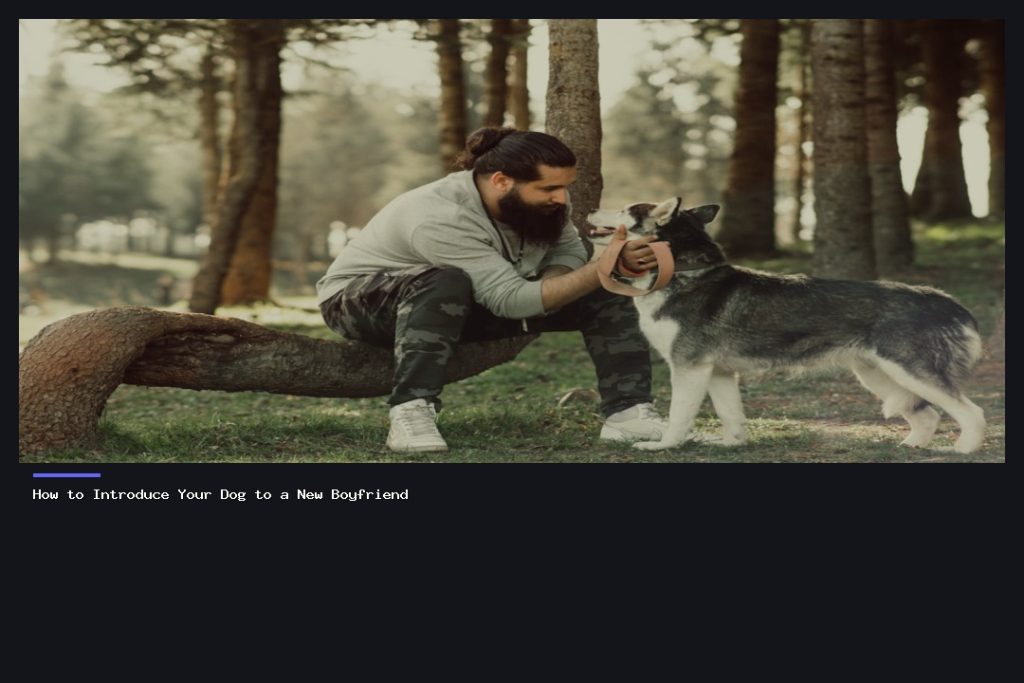
Choose a neutral location for the first meeting — a park, a quiet trail, or an open outdoor space works far better than your home. Your home is your dog’s established territory. Bringing a stranger directly into that space can trigger defensive or territorial behavior even in otherwise friendly dogs. The American Kennel Club specifically recommends neutral ground for introducing dogs to new people, noting that territorial instincts drop significantly when dogs meet strangers outside their home environment.
Ask your boyfriend to arrive before you and your dog. Have him stand calmly in an open area, avoiding direct eye contact with the dog at first. Many dogs — especially those with any anxiety or under-socialization history — read direct eye contact as a challenge or threat. Your boyfriend should keep his body turned slightly sideways, arms relaxed at his sides, and let the dog approach on its own terms. This body language signals non-aggression and hands your dog full control over how fast things move.
Keep your dog on a standard 6-foot leash during the first meeting. Skip retractable leashes — they give you less control and create line tension that transfers straight to your dog’s emotional state. Walk toward your boyfriend slowly, keeping the leash loose. A tight leash communicates stress and can escalate arousal or anxiety fast. If your dog pulls toward him with a relaxed, wiggly body, allow a brief sniff. If your dog hesitates or stiffens, stop walking and give them time to observe from a comfortable distance.
Step-by-Step Flow for the First Encounter
Follow this specific sequence to keep the introduction calm and controlled from start to finish.
- Pre-meeting exercise: Walk or play with your dog for at least 30 minutes before the meeting to lower their baseline arousal level.
- Neutral location arrival: Your boyfriend arrives first and positions himself calmly, avoiding direct eye contact.
- Parallel walking: Instead of a face-to-face greeting, walk side by side with your boyfriend at a comfortable distance for 5 to 10 minutes. This shared, low-pressure activity helps your dog associate him with calm movement rather than confrontation.
- Allow the dog to initiate: Let your dog sniff your boyfriend at their own pace. He should avoid reaching over the dog’s head, which feels threatening. Instead, offer a closed fist at the dog’s nose level and wait.
- Reward calm behavior: Immediately reward any relaxed interaction with high-value treats. Use small, soft treats your dog can consume quickly without breaking the social moment.
- Keep the session short: The first meeting should last no longer than 15 to 20 minutes. Ending on a positive note before your dog gets overstimulated builds a strong foundation for future interactions.
Don’t force any physical contact during the first session. If your dog accepts a sniff and then moves away, that’s a win. Pushing for petting, hugging, or prolonged interaction too early is one of the most common mistakes that derails an otherwise smooth introduction. The ASPCA consistently emphasizes letting dogs set the pace of social interactions to prevent fear responses from becoming entrenched behavioral patterns.
Managing Initial Reactions
Identify your dog’s specific reaction within the first 60 seconds of the meeting, because your response strategy depends entirely on what you observe. Dog behavior around strangers falls into three broad categories: enthusiastic and social, cautious and neutral, or fearful and reactive. Each one calls for a different immediate approach.
An enthusiastic dog that rushes toward your boyfriend, jumps, or barks excitedly needs redirection — not punishment. Ask for a “sit” before allowing any greeting. Have your boyfriend turn away and ignore the jumping completely. Reward the moment all four paws hit the ground. This teaches your dog that calm behavior earns access to the exciting new person. Cesar Millan and many certified behaviorists stress that rewarding calm states rather than reacting to excited ones produces faster behavioral change in high-energy dogs.
A cautious or hesitant dog needs patience above everything else. Keep your boyfriend stationary, speaking in a low, even tone if he speaks at all. Don’t coax your dog forward with repeated calls or outstretched hands. Your boyfriend can toss treats near the dog without making eye contact, letting the dog approach the food at its own pace.
A fearful or reactive dog showing stiff body language, growling, or hard staring needs immediate distance. Increase the space between your dog and your boyfriend until the dog’s body visibly relaxes. Never correct a growl with punishment. Growling is communication, and suppressing it removes a warning signal without touching the underlying fear. If your dog shows consistent fear or aggression across multiple introduction attempts, consult a certified applied animal behaviorist or a veterinary behaviorist before continuing. Managing dog anxiety at this level requires professional guidance tailored to your dog’s specific history and triggers.
Across all reaction types, consistency between sessions matters more than any single interaction. Schedule short, positive encounters every two to three days rather than pushing for rapid progress. Partner-pet bonding builds incrementally, and dogs form lasting positive associations through repeated low-stress exposure far more reliably than through any single dramatic breakthrough moment.
Building a Positive Relationship
During the first month, schedule three to five short, low-pressure interactions per week. This builds consistent positive associations between your dog and your boyfriend. Consistency is the single most reliable driver of partner-pet bonding. Dogs learn through repetition, and each calm, rewarding encounter adds another layer of trust to the relationship.
Your boyfriend should become a reliable source of good things in your dog’s world. He can take over feeding duties two or three times a week — a small shift that carries surprising weight in how dogs assign trust. He can also be the one who produces the high-value treat your dog only gets occasionally, like a small piece of chicken or a freeze-dried liver treat from brands like Zuke’s or Vital Essentials. Once your dog starts connecting his presence with food, play, and calm energy, the relationship moves from neutral to actively positive within weeks rather than months.
Dog-Friendly Activities to Strengthen the Bond?
Walking together is one of the fastest ways to build trust between a dog and a new person. The American Kennel Club notes that parallel movement creates a sense of shared purpose that dogs respond to instinctively. Have your boyfriend hold the leash during portions of the walk once your dog is comfortable enough. Start with five minutes of leash time and increase gradually over successive walks.
Interactive play is equally powerful. Your boyfriend can kick off fetch sessions, tug games, or hide-and-seek with your dog’s favorite toy. Play triggers dopamine release in dogs, and they form strong positive memories around the people who engage them this way. Keep play sessions to ten or fifteen minutes at first. End each session while your dog still wants more — this keeps anticipation high heading into the next interaction.
Training sessions led by your boyfriend accelerate bonding significantly. Teaching your dog a new trick like “spin” or “touch” over five to seven days gives your boyfriend a structured role and gives your dog a clear framework for interaction. Dogs that learn commands from a person build a working relationship with them rooted in communication and reward. That dynamic shifts him from stranger to trusted figure far faster than passive coexistence ever could.
Maintaining Your Dog’s Routine During the Transition
Keep your dog’s existing schedule intact throughout the bonding process. Feeding times, walks, and sleep routines should stay consistent even as your boyfriend’s presence increases. Dogs are highly sensitive to disruptions in their daily structure, and pairing a new person with an unstable routine creates unnecessary stress that slows bonding.
Your dog also needs to keep its established relationship with you during this period. Some owners unintentionally cut back on one-on-one time with their dog while focusing on the new relationship dynamic. Preserve your regular solo walks, training sessions, and quiet time together. A dog that feels secure in its bond with you will approach new relationships from a place of confidence rather than anxiety.
Handling Challenges and Setbacks
Regression is normal. A dog that seemed comfortable during week two may become hesitant again in week four, especially after a gap in visits or a stressful event like a thunderstorm or a vet appointment. Treat regression as data, not failure. It signals the bonding process needs more time at an earlier stage — not that the relationship is broken.
Common obstacles include resource guarding, where your dog becomes tense or snappy when your boyfriend approaches food, toys, or sleeping spots. Address this right away. Toss high-value treats near your boyfriend whenever he approaches your dog’s resource zone, so his proximity predicts good things rather than competition. Patricia McConnell’s work on resource guarding, widely referenced by certified professional dog trainers, outlines this counter-conditioning approach in practical detail for home use.
Recognizing When Professional Help Is Necessary
Contact a certified applied animal behaviorist or a veterinary behaviorist if your dog shows any of the following across three or more separate encounters: sustained growling, snapping, lunging, or a complete inability to take treats due to stress. These signs indicate that the anxiety or reactivity goes beyond what standard socialization techniques can safely address at home.
The ASPCA recommends seeking a board-certified veterinary behaviorist for cases involving fear-based aggression. These professionals can assess whether behavioral modification alone is enough or whether short-term anti-anxiety medication would support the training process. Medications like fluoxetine or trazodone, prescribed by a veterinarian, are sometimes used to lower baseline anxiety enough for behavior modification to take hold .
Cesar Millan and many certified dog trainers also point out that the human relationship dynamic affects the dog’s response. If tension exists between you and your boyfriend during visits, your dog picks up on it immediately. Dogs read cortisol levels, body language, and vocal tone with remarkable accuracy. Addressing interpersonal stress in the room is part of managing your dog’s anxiety during the introduction process.
Keeping Realistic Expectations for the Timeline
Full comfort between a cautious dog and a new partner typically takes six to twelve weeks of consistent, positive interaction. Dogs with prior negative experiences with men or strangers may need four to six months. Set milestone goals rather than deadlines. Celebrate the first time your dog voluntarily approaches your boyfriend, the first time it accepts petting, and the first time it fully relaxes in his presence. Each milestone confirms the process is working, even when overall progress feels slow.
The Importance of Consistency and Patience
Repeat the same greeting ritual at every visit for at least the first eight weeks. Dogs learn through repetition, and a predictable pattern tells your dog that your boyfriend’s arrival is safe and structured — rather than some unpredictable disruption that sets off alarm bells. Consistency removes the guesswork that triggers anxiety.
Your boyfriend’s behavior needs to stay uniform across every visit. If he gives your dog space on Monday but tries to initiate contact on Wednesday without waiting for the dog to approach, those mixed signals reset trust entirely. The American Kennel Club specifically notes that inconsistent handling is one of the main reasons dog introductions stall or regress. Give your boyfriend a clear, simple role at each visit: enter calmly, sit down, ignore the dog until it approaches, then offer a treat with an open palm.
Patience isn’t passive waiting. It’s an active decision to let the dog set the pace on every single interaction. Rushing a nervous dog into accepting affection before it’s ready creates a negative association that can take weeks to undo. Give the process the time it actually needs, not the time you wish it needed.
Building a Reliable Routine Around Your Boyfriend’s Visits
Schedule your boyfriend’s visits at the same time of day whenever you can. Dogs run on internal clocks, and a consistent arrival time becomes part of their daily rhythm rather than an interruption to it. Pair his arrival with something your dog already loves — a walk, a puzzle feeder, or a training session with high-value treats like small pieces of chicken or cheese.
Keep early visits predictable in length, too. Thirty to forty-five minutes works far better than marathon sessions during the first month. Brief, positive interactions are easier for a dog to process and tend to end on a high note before stress gets a chance to build. Gradually extend visit duration in fifteen-minute increments as your dog shows relaxed body language: loose tail wag, soft eyes, and a willingness to settle on its bed while your boyfriend is present.
Staying Consistent With Your Own Reactions
Your emotional state directly shapes your dog’s response. Tensing up when your boyfriend walks in — because you’re anxious about how your dog will react — reads to your dog as a warning signal. Breathe deliberately, keep a relaxed posture, and greet your boyfriend calmly rather than scanning your dog for problems the second the door opens.
Avoid harsh corrections in front of your boyfriend during the introduction period. Those corrections link his presence to negative experiences, which is the opposite of what you’re building toward. When your dog does something that needs addressing, use a calm, neutral redirect instead. Move your dog to another room for a short timeout if needed, then reintroduce the situation at a lower intensity.
Maintaining Harmony at Home
Set clear physical boundaries inside your home before your boyfriend starts spending extended time there. Designate specific spots as your dog’s safe zones — a crate, a dog bed in a quiet corner, or a particular room. These spaces belong exclusively to your dog, and your boyfriend should never follow the dog into them uninvited. This boundary gives your dog a reliable retreat, which lowers overall anxiety during longer visits.
Introduce shared spaces gradually. Start with your boyfriend sitting in the living room while your dog has free access to come and go as it pleases. Progress to shared mealtimes, where both your dog and your boyfriend are in the same space without either competing for attention. The ASPCA advises that dogs who feel their core needs for food, rest, and safety stay protected are far more likely to accept new household members without prolonged stress.
Creating Shared Positive Experiences at Home
Daily walks together are one of the fastest ways to build real partner-pet bonding within the home routine. Once your dog accepts your boyfriend’s presence comfortably, let him hold the leash on low-distraction walks. Walking side by side activates cooperative behavior in dogs and positions your boyfriend as a trusted companion rather than just a recurring guest.
Play sessions work just as well. Use a flirt pole or tug toy that your boyfriend can operate without reaching directly over the dog’s head — many dogs find that motion threatening, and it can undo progress quickly. Keep sessions short, five to ten minutes, and always stop while your dog still wants more. That leaves a positive emotional residue that carries right into the next interaction.
Balancing Attention Between Your Dog and Your Boyfriend
Don’t dramatically cut your dog’s one-on-one time with you once your boyfriend becomes a regular presence. Dogs that experience a sudden drop in attention from their primary attachment figure often redirect that stress toward the new person. Keep your solo walks, training sessions, and quiet time with your dog intact. That security makes your dog far more open to sharing your attention rather than competing for it.
Talk openly with your boyfriend about your dog’s needs and boundaries. A partner who understands why certain rules exist — like not feeding table scraps or not waking a sleeping dog — is far more likely to follow them reliably.
Frequently Asked Questions
How long does it usually take for a dog to accept a new boyfriend?
Most dogs with no prior trauma accept a calm, consistent new person within six to twelve weeks of regular positive interactions. Dogs with fear histories or limited socialization may need four to six months — a range that surprises most people expecting faster results. Track progress by milestone moments rather than calendar dates. Watch for the first time your dog voluntarily approaches your boyfriend or fully relaxes in his presence.
Should your boyfriend feed your dog to help build a bond faster?
Yes, having your boyfriend deliver high-value treats like small pieces of cooked chicken or commercial training treats such as Zuke’s Mini Naturals is one of the most effective bonding tools available. During early visits, ask him to toss treats toward your dog rather than reaching out directly. Once your dog approaches on his own terms, your boyfriend can offer treats from an open palm (the shift from tossing to hand-feeding is a bigger deal than it sounds). That reinforces close contact as something worth seeking out.
How do you help a dog that growls at your boyfriend?
Never punish growling. It’s your dog’s warning signal, and suppressing it removes a critical safety communication tool. Instead, increase the distance between your boyfriend and your dog until the growling stops. Then use counter-conditioning — pairing your boyfriend’s presence with high-value treats at that safe distance. If growling persists across three or more separate sessions, contact a certified applied animal behaviorist or ask your veterinarian for a referral to a board-certified veterinary behaviorist.
Can a dog become jealous of a new boyfriend?
Dogs do display jealousy-like behaviors, including pushing between you and your boyfriend, attention-seeking barking, or becoming clingy when you show affection. Keep up your dog’s regular one-on-one time with you so he doesn’t associate your boyfriend with losing access to you. Reward calm, settled behavior when all three of you are together, so your dog learns that your boyfriend’s presence predicts good things rather than competition.
Should you introduce your dog to your boyfriend at home or in a neutral location?
A neutral location — like a park or a quiet trail — works better for that very first meeting. Away from home, your dog is far less likely to display territorial behavior. Keep both your dog and your boyfriend moving during this first encounter, since parallel walking reduces direct face-to-face pressure. After one or two successful neutral meetings, transition to home introductions where your dog has familiar surroundings to retreat to if needed.
How do you know when your dog has fully accepted your boyfriend?
Look for consistent relaxed body language across multiple visits: a loose, wagging tail, soft eyes, a relaxed mouth, and a willingness to settle on a bed or the floor while your boyfriend is present without tracking his every move. Your dog actively seeking out your boyfriend for petting or play is a strong sign of genuine acceptance. Full comfort is confirmed when your dog shows that same relaxed behavior whether you’re in the room or not.