
Key Takeaways
- Dog nibbling behavior can signal both affection and dominance, and understanding the difference is essential for responsible pet ownership.
- Gentle, rhythmic nibbling between dogs is often a sign of bonding, mutual grooming, and positive puppy interaction rooted in early socialization.
- Nibbling that accompanies stiff posture, growling, or resource guarding may indicate dominance-related behavior and should be monitored carefully.
- Canine communication relies heavily on dog body language, and nibbling must always be interpreted alongside other behavioral signals.
- Organizations like the American Kennel Club and the ASPCA emphasize that positive reinforcement training is the most effective way to manage unwanted nibbling.
- Experts including Victoria Stilwell and Cesar Millan offer contrasting but complementary perspectives on dog pack dynamics and how hierarchy shapes dog-to-dog communication.
- Early puppy socialization techniques play a critical role in shaping how dogs learn to use nibbling appropriately throughout their lives.
Introduction to Dog Nibbling Behavior
If you have ever watched two dogs interact at a dog park, in a backyard, or even inside your living room, you have almost certainly witnessed the curious behavior of one dog nibbling on another. This gentle, repetitive mouthing action — sometimes called “cobbing” or “corn on the cob nibbling” — is one of the most commonly observed yet frequently misunderstood behaviors in the canine world. Whether it occurs between two puppies meeting for the first time or between adult dogs that have lived together for years, nibbling is a deeply embedded part of dog-to-dog communication that carries a surprising range of meanings.
Understanding dog nibbling behavior is not just an academic exercise for dog behaviorists and researchers. It is a genuinely practical skill for every dog owner, dog trainer, and pet care professional. Misreading a nibble can lead to unnecessary anxiety, poorly timed interventions, or — in more serious cases — allowing genuinely problematic dominance behaviors to go unchecked. The American Kennel Club notes that dogs communicate in complex, layered ways, and a single action like nibbling can mean very different things depending on context, posture, and the relationship between the animals involved. This article will walk you through everything you need to know to decode what is really happening when dogs nibble each other.
Featured Snippet: Dog nibbling behavior occurs when one dog uses its front teeth to gently mouth another dog’s fur, skin, or ears. It can signal affection, mutual grooming, or playful bonding, but it may also reflect dominance or hierarchy establishment. Context, body language, and the dogs’ relationship are essential for accurate interpretation.
What is Puppy Love? The Affectionate Side of Nibbling
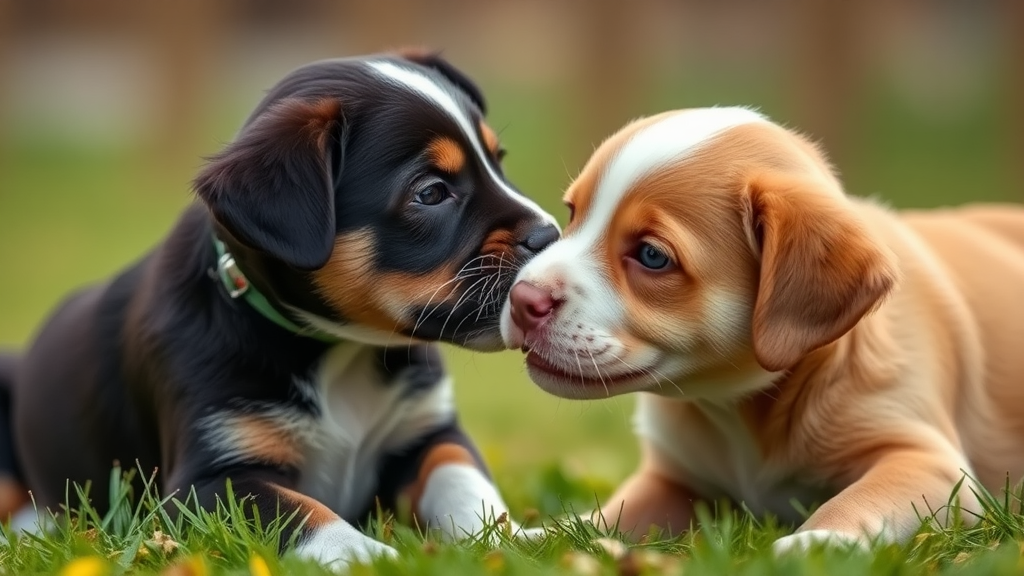
For many dogs, nibbling is one of the purest expressions of comfort and closeness they know. This behavior has deep roots in early puppyhood, beginning in the whelping box where littermates nibble on each other as a form of mutual grooming and physical exploration. Long before puppies develop the vocabulary of barks, growls, and tail wags, they use touch — including gentle mouthing and nibbling — to establish bonds, communicate safety, and reinforce their connections with siblings and their mother. This early foundation means that nibbling carries strong positive emotional associations for most dogs throughout their lives.
When an adult dog nibbles gently on a companion dog’s neck, ears, or back, it is often replicating this same early bonding ritual. Dog behaviorists and organizations like the ASPCA describe this type of nibbling as allogrooming — a social grooming behavior seen across many species, from primates to birds, that reinforces social bonds and signals trust. You can usually identify affectionate nibbling by the relaxed body language that accompanies it: loose, wiggly posture, soft eyes, and a calm, unhurried rhythm to the mouthing. The dog being nibbled typically remains still and relaxed, sometimes even leaning in, which is a clear behavioral signal that the interaction is welcome and enjoyable.
Puppy playtime is another context in which affectionate nibbling thrives. During play sessions, dogs often engage in reciprocal nibbling as part of a broader repertoire of play behaviors that includes chasing, wrestling, and play bowing. Victoria Stilwell, the internationally recognized dog trainer and advocate of positive reinforcement training, emphasizes that this kind of play-based nibbling is a healthy and necessary part of puppy interaction. It teaches dogs about bite inhibition, social boundaries, and how to read the responses of other dogs — all foundational skills for a well-adjusted adult dog. Far from being a problem behavior, affectionate nibbling in the right context is a sign of a socially healthy and emotionally secure animal.
Understanding Dominance: The Other Side of Nibbling
While nibbling is frequently a warm and affectionate behavior, it exists on a spectrum — and at the other end of that spectrum lies something considerably more complex. In the context of dog pack dynamics and canine hierarchy, nibbling can also serve as a subtle but deliberate assertion of social status. Dogs are descended from animals that lived in structured social groups, and even in domestic settings, many dogs retain instincts related to establishing and maintaining their position within a social order. Nibbling directed at another dog’s neck, muzzle, or back — particularly when accompanied by a stiff posture, direct eye contact, or a deliberate, pressing quality to the mouthing — can be a way of communicating dominance rather than affection.
Cesar Millan, the widely known dog behavior expert, has long argued that understanding canine dominance is essential to interpreting behaviors like nibbling accurately. While his framework has been debated within the scientific community, the core observation holds true: dogs do establish hierarchies, and physical interactions including nibbling can be one of the tools they use to negotiate and reinforce those hierarchies. The key distinction lies in the details. Dominant nibbling tends to be more persistent, targeted toward specific body areas associated with social control — such as the muzzle or the back of the neck — and is more likely to occur in situations involving resources like food, toys, or preferred resting spots. The dog being nibbled may show signs of submission such as lowering its body, averting its gaze, or attempting to move away.
It is important to note that dominance in dogs is a nuanced and often misapplied concept. Modern dog behaviorists and institutions like the ASPCA caution against over-labeling behaviors as dominant without careful observation of the full context. Not every persistent nibble is a power play, and not every dog that nibbles assertively is on the path to aggression. However, when nibbling is paired with other concerning dog behavioral signals — such as resource guarding, growling, or an overall pattern of controlling behavior toward other dogs — it warrants closer attention. Recognizing these signs early allows owners and trainers to intervene with appropriate puppy training techniques before the behavior escalates into something more serious.
Canine Communication: Interpreting Body Language
Dogs cannot speak in words, but they are remarkably expressive communicators. Every nibble between dogs is embedded in a much larger conversation happening through posture, eye contact, tail position, ear orientation, and muscle tension. Understanding dog body language is the single most powerful tool owners have for interpreting what nibbling actually means in any given moment.
When two dogs engage in playful nibbling, the surrounding body language is loose and fluid. Tails wag in wide, sweeping arcs. Bodies bounce and curve. Dogs often take turns initiating and receiving contact. This reciprocal quality is a strong indicator of mutual enjoyment. The ASPCA notes that relaxed facial muscles, soft eyes, and an open mouth are reliable signs that a dog is engaged in friendly, non-threatening dog play behavior. Canine communication in these moments is cooperative rather than competitive.
Reading Tension Signals During Nibbling
Dominant or stress-related nibbling looks entirely different. The body stiffens. Movement becomes deliberate rather than bouncy. Eye contact intensifies and holds longer than comfortable. The nibbling dog may lean its weight forward over the other dog rather than staying at equal level. These are not subtle cues — once you know what to look for, they stand out clearly against the backdrop of relaxed play.
Many owners find it helpful to watch the dog being nibbled just as closely as the dog doing the nibbling. A dog that is enjoying the interaction will lean in, reciprocate, or offer a play bow. A dog that feels pressured will try to move away, lower its body, lick its lips, or turn its head aside — all classic appeasement signals in dog-to-dog communication. Victoria Stilwell, the internationally respected positive reinforcement trainer, emphasizes that these calming signals are a dog’s polite way of asking for space. Ignoring them — either by the nibbling dog or by a watching owner — can escalate tension quickly.
In practice, context matters enormously. The same nibbling behavior can carry completely different meanings depending on the environment, the relationship between the dogs, and what happened moments before. A nibble that follows a play bow means something very different from a nibble that follows a resource dispute. Training yourself to observe the full picture — not just the mouth — transforms your ability to understand canine dominance and affection accurately.
Differentiating Play from Dominance
This is the question most dog owners eventually ask: is my dog playing, or is something else going on? The honest answer is that both can look similar on the surface. The difference lives in the details — specifically in the pattern, persistence, and response of both dogs involved.
Playful nibbling is self-correcting. If one dog nibbles too hard, the other yelps or disengages briefly, and the nibbling dog backs off. The interaction resets and resumes. This natural feedback loop is the hallmark of healthy puppy playtime and dog play behavior. Dominant nibbling, by contrast, does not respond to these corrections. The nibbling dog continues or escalates despite clear signals from the other dog to stop. This persistence is the clearest red flag owners can watch for.
Practical Signs That Separate Play from Control
There are specific behavioral signals that help draw the line clearly. Playful nibbling tends to occur in open, neutral spaces. It involves frequent role reversals — both dogs take turns being the nibbler and the nibbled. Breaks happen naturally. Neither dog appears anxious or tense after the interaction ends. Dog pack dynamics during genuine play feel balanced and relaxed.
Dominance-related nibbling tends to concentrate on specific body areas — particularly the muzzle, the back of the neck, or the shoulders. It often occurs near valued resources. One dog consistently initiates while the other consistently defers. After the interaction, the submissive dog may appear tense, avoidant, or reluctant to re-engage. Based on professional guidance from modern dog behaviorists, this pattern — not a single isolated incident — is what signals a genuine dominance dynamic worth addressing.
Many owners find that keeping a brief mental log of these interactions helps them spot patterns faster. If one dog always nibbles and the other always yields, that asymmetry deserves attention. Early intervention using positive reinforcement training techniques can redirect the behavior before it becomes entrenched. Understanding dog behavior accurately — rather than reacting to surface appearances — is what allows owners to support healthy, balanced relationships between their dogs.
Training Techniques to Manage Nibbling
Managing unwanted nibbling starts with consistency. Dogs learn through repetition, so your response must be the same every single time the behavior occurs. Many owners find that mixed signals — sometimes allowing nibbling, sometimes correcting it — actually make the behavior worse over time. Pick a clear boundary and hold it firmly.
The most effective approach uses positive reinforcement training. When a dog chooses not to nibble, reward that choice immediately. Use high-value treats, praise, or play as the reward. This teaches the dog that restraint pays off. Based on professional guidance from certified dog behaviorists, redirecting the behavior toward an acceptable outlet — like a chew toy — works faster than punishment-based corrections. Punishment can suppress the behavior temporarily but rarely addresses the underlying drive.
Puppy training techniques like “leave it” and “enough” give dogs a clear verbal cue to disengage. Practice these commands during calm moments first, then apply them during play. The American Kennel Club (akc.org) recommends building impulse control through short, structured training sessions rather than long, exhausting ones. Five minutes of focused practice beats thirty minutes of inconsistent correction every time.
In practice, timing is everything. Corrections or redirections must happen within two seconds of the behavior to be effective. Delayed responses confuse dogs. They cannot connect a correction to an action that happened thirty seconds ago. Stay present and attentive during puppy interaction sessions so you can respond at exactly the right moment.
Common Misconceptions About Dog Nibbling
Dog nibbling behavior carries a surprising amount of myth around it. Many owners misread what they see, and those misreadings can lead to poor decisions — either ignoring a real problem or overreacting to something completely harmless. Clearing up these misconceptions makes you a more accurate observer and a better advocate for your dog.
Myth: All Nibbling Means Dominance
This is perhaps the most widespread myth. The word “dominance” gets applied to almost every canine behavior that looks assertive, and nibbling is no exception. In reality, the vast majority of nibbling between dogs is social, playful, or grooming-related. Dogs use their mouths the way humans use their hands — to explore, to connect, and to communicate. Labeling every nibble as a power play misrepresents normal dog body language and creates unnecessary anxiety for owners.
Modern dog behavioral science has moved well beyond the rigid dominance hierarchies popularized decades ago. The ASPCA (aspca.org) explicitly notes that dominance theory has been widely misapplied to domestic dog behavior. Context, relationship history, and body language together tell the real story — not the nibble alone.
Myth: Nibbling Always Signals Aggression
Many people panic the moment they see one dog put its mouth on another. They assume aggression is imminent. This misreads canine communication entirely. Gentle muzzle nibbling between familiar dogs is often a bonding behavior. It mirrors the allogrooming seen in many social species. A dog that nibbles calmly, with a loose body and relaxed face, is not threatening anyone.
Aggression has distinct signals — stiff posture, hard stare, low growl, raised hackles. Nibbling without these signals is almost never aggressive. Many owners find that once they learn to read the full picture of dog body language, their anxiety about nibbling drops significantly. Understanding dog behavior accurately removes the fear that comes from incomplete information.
Myth: You Should Always Let Dogs “Work It Out”
Some owners believe human intervention during nibbling is unnecessary or even harmful. They assume dogs will naturally self-regulate. While healthy play does self-correct, this is not always the case. When one dog consistently ignores the other’s stop signals, human guidance becomes necessary. Waiting too long can allow a problematic dynamic to become a fixed habit. Stepping in early — calmly and clearly — is responsible ownership, not interference.
Expert Opinions and Case Studies
Experts across the field of dog behavior offer valuable perspective on nibbling. Their insights cut through popular myths and ground the conversation in observable, repeatable evidence. What they consistently emphasize is nuance — the same behavior can mean very different things depending on the dogs involved.
What Professionals Observe in Real Cases
Victoria Stilwell, a well-known positive reinforcement trainer and animal behaviorist, has spoken extensively about how owners misinterpret dog-to-dog communication. In her work, she stresses that nibbling only becomes a concern when it is persistent, one-sided, and accompanied by stress signals in the receiving dog. Isolated incidents rarely indicate a deeper problem. Patterns do.
In practice, behaviorists working with multi-dog households report that most nibbling complaints resolve once owners implement consistent management strategies. One common case involves a younger, higher-energy dog repeatedly nibbling an older, less tolerant dog. The older dog communicates discomfort through stiffening and lip lifts. The younger dog ignores those signals. In these cases, structured supervision and redirecting the younger dog’s energy toward appropriate outlets resolves the tension within a few weeks.
Cesar Millan has highlighted dog pack dynamics and the importance of calm, assertive energy from owners when managing interactions between dogs. While his specific methodology draws debate among behaviorists, his core observation holds weight — dogs read their owners’ emotional states. An anxious owner hovering over every interaction can actually increase tension between dogs rather than reduce it.
Patterns That Experts Consistently Flag
Based on professional guidance from multiple dog behaviorists, the red flags worth acting on are clear. Persistent muzzle grabbing that does not stop when the other dog signals discomfort deserves attention. Nibbling that escalates in frequency or intensity over time warrants a professional evaluation. Puppy socialization gaps — particularly in dogs who missed key developmental windows — often show up as poor bite inhibition and misread social cues during nibbling interactions.
Many owners find that a single consultation with a certified applied animal behaviorist provides enormous clarity. Professionals can observe the dogs in real time, identify the specific dynamic at play, and build a targeted plan. Dog nibbling behavior is rarely as simple as it looks — and rarely as alarming as it feels. With the right knowledge and support, most cases resolve successfully.
Conclusion: Promoting Healthy Dog Interactions
Dog nibbling behavior sits at a fascinating crossroads between affection, play, communication, and social structure. Throughout this article, we have explored how the same physical action can carry entirely different meanings depending on context, body language, and the relationship between the dogs involved. Understanding those differences is not just interesting — it directly shapes how you respond, intervene, and support your dogs.
Many owners find that simply learning to read canine body language transforms their experience of watching dogs interact. What once looked alarming often reveals itself as normal play behavior. What once seemed harmless occasionally shows early warning signs worth addressing. That shift in perception — from reactive to informed — is where responsible dog ownership begins.
Key Lessons Worth Carrying Forward
The most important takeaway from this entire discussion is that context drives meaning. A puppy nibbling a littermate during play is doing something fundamentally different from an adult dog repeatedly pinning and muzzle-grabbing a smaller, clearly stressed companion. Both involve nibbling. Neither situation calls for the same response.
Puppy socialization plays a massive role in how dogs develop their nibbling habits. Dogs who receive early, positive exposure to a variety of other dogs learn bite inhibition and social cues naturally. Those who miss those developmental windows often struggle with reading and respecting stop signals. Recognizing this helps owners approach problem behavior with empathy rather than frustration.
Canine communication is layered and subtle. A wagging tail does not automatically signal happiness. A stiff posture during nibbling changes the entire meaning of the interaction. Dog body language works as a system — individual signals combine to tell a fuller story. Training yourself to read that system pays dividends every single day.
When to Seek Professional Support
Not every nibbling situation requires expert intervention. Most interactions between well-socialized, evenly matched dogs resolve naturally with minimal owner input. However, certain patterns consistently signal that professional guidance would help. Persistent one-sided nibbling, escalating intensity, stress signals in the receiving dog, and any history of resource guarding or prior aggression all warrant a closer look.
The American Kennel Club offers extensive resources on dog behavior, breed-specific tendencies, and how to find qualified trainers in your area. The ASPCA also provides detailed behavioral guidance for multi-dog households, including step-by-step advice on managing social tension. Using these resources alongside professional support gives you a well-rounded foundation.
Based on professional guidance from certified applied animal behaviorists, early intervention consistently produces better outcomes than waiting for problems to escalate. A single structured consultation often provides the clarity owners need to move forward with confidence. Dog behavioral signals rarely lie — the challenge is learning to read them accurately and respond appropriately.
Building a Positive Foundation for Dog-to-Dog Relationships
In practice, the dogs who thrive in multi-dog households share one common advantage — owners who pay attention. Active, informed supervision during puppy interaction and adult dog play creates an environment where healthy habits form naturally. It also means problems get caught early, before they become entrenched patterns.
Positive reinforcement training remains the most widely supported approach for shaping healthy dog-to-dog communication. Rewarding calm, respectful interactions teaches dogs what good behavior looks like. Redirecting inappropriate nibbling consistently — without harsh correction — builds new habits over time. Victoria Stilwell and many leading dog behaviorists consistently advocate for this approach as both effective and relationship-preserving.
Dog pack dynamics are real, but they are also flexible. Dogs adjust their behavior based on environment, relationships, and the signals they receive from both other dogs and their human family. Dominance in dogs is not a fixed, inevitable force. It is a dynamic that responds to management, structure, and clear, calm leadership from owners.
Puppy playtime should be joyful, energetic, and occasionally a little rough — that is entirely normal. The goal is never to eliminate all nibbling or prevent all boisterous play. The goal is to ensure every dog in the interaction feels safe, respected, and able to communicate freely. When that foundation exists, most dogs navigate their relationships remarkably well on their own.
Understanding dog nibbling behavior is ultimately an act of respect — for your dogs, for their natural communication system, and for the relationship you are building together. The more you understand, the better equipped you are to support healthy, happy interactions for every dog in your care.
Frequently Asked Questions
What is Puppy Love? The Affectionate Side of Nibbling
Puppy love nibbling is a form of social grooming that reinforces bonds and signals trust among dogs.
What About Understanding Dominance: The Other Side of Nibbling?
Dominant nibbling involves more persistent behavior aimed at asserting social status, often accompanied by stiff posture.
What About The Role of Socialization in Puppy Behavior?
Socialization helps puppies learn appropriate nibbling, establishing bite inhibition and social boundaries.


The Role of Socialization in Puppy Behavior
Early socialization shapes nearly every aspect of a dog’s behavior — and nibbling is no exception. Puppies that interact with other dogs during the critical developmental window (roughly 3 to 14 weeks of age) learn how to use their mouths appropriately. They discover what pressure is acceptable, when to stop, and how to read the reactions of other dogs. This learning process is the foundation of healthy dog nibbling behavior throughout a dog’s life.
In practice, puppies that miss this window often struggle to calibrate their mouthing. They may nibble too hard, too persistently, or in contexts that confuse other dogs. Many owners find that undersocialized dogs either become overly mouthy or overly fearful during puppy interaction — both of which create problems in adult dog relationships. The American Kennel Club strongly recommends structured socialization classes that expose puppies to a wide variety of dogs, people, and environments during this formative period.
Based on professional guidance from certified dog behaviorists, socialization is not simply about exposure — it is about quality interaction. Supervised puppy playtime allows young dogs to practice dog-to-dog communication in a safe environment. They learn to interpret dog behavioral signals accurately. They also learn when a nibble is welcome and when it crosses a line. This early education directly reduces the likelihood of dominance-based nibbling patterns developing later in life. Investing in proper puppy socialization techniques early pays dividends in calmer, more socially fluent adult dogs.