Key Takeaways
- First Woman Equity has introduced two certified Friends Companions with Paws therapy dogs to West Virginia schools, expanding access to animal-assisted therapy in underserved communities.
- Therapy dogs provide measurable emotional, social, and academic benefits, including reduced anxiety, improved attendance, and stronger peer relationships among students.
- Research consistently shows that animal-assisted therapy programs lower cortisol levels in students and create calmer, more focused learning environments.
- Friends Companions with Paws is a structured, certified therapy dog organization whose trained animals meet rigorous behavioral and health standards before entering school settings.
- WV schools participating in this initiative report increased student engagement and a greater willingness among children to seek emotional support from trusted adults.
- First Woman Equity’s school wellbeing program represents a broader commitment to closing equity gaps in mental health resources across West Virginia.
Introduction to First Woman Equity’s Initiative
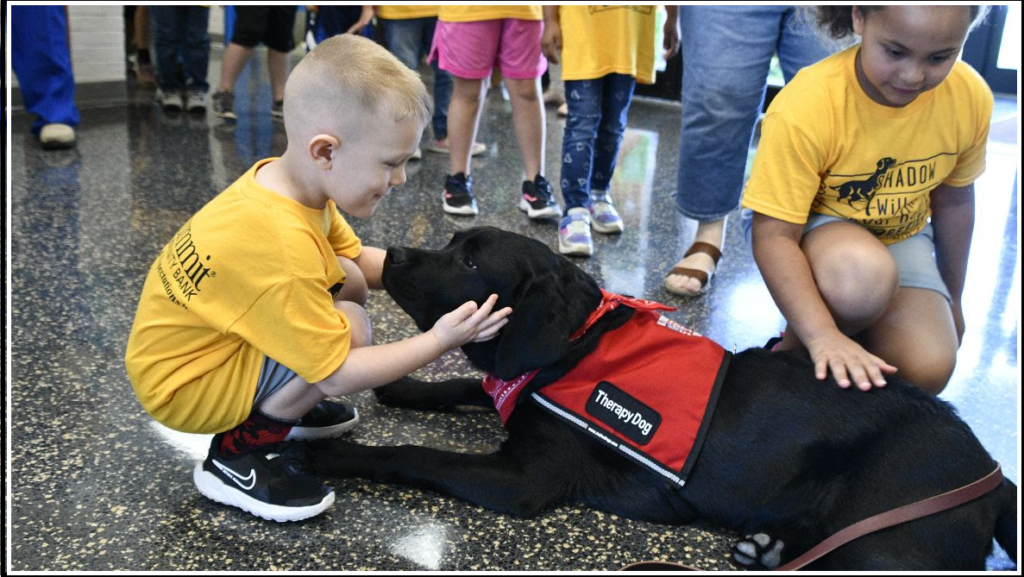
First Woman Equity has introduced two certified Friends Companions with Paws therapy dogs to West Virginia schools, delivering structured animal-assisted therapy to students who lack consistent access to mental health support. This initiative targets emotional and academic wellbeing at the same time — offering a compassionate, research-backed way to bridge critical equity gaps in school health programs across the state.
First Woman Equity is a West Virginia-based nonprofit focused on advancing equity in education, health, and community wellbeing. Their work centers on populations that traditional support systems have long underserved. The organization operates on a core belief: every student, regardless of zip code or socioeconomic background, deserves the resources to thrive emotionally and academically. True to that mission, First Woman Equity has partnered with Friends Companions with Paws to bring two certified therapy dogs into WV schools — a meaningful milestone in their growing portfolio of student-centered work.
This isn’t simply a feel-good gesture. It’s a carefully planned, evidence-based intervention designed to address the growing mental health crisis among school-aged children in West Virginia (a state facing disproportionately high rates of childhood trauma, poverty-related stress, and scarce licensed counselors). By embedding trained companion animals directly into schools through the Friends Companions with Paws program, First Woman Equity creates consistent, low-barrier emotional support that students can access during the school day. The initiative reflects a forward-thinking approach — one that treats animal-assisted therapy as a complement to existing mental health services, not a replacement for them.
Benefits of Therapy Dogs in Schools
Peer-reviewed research, school district reports, and longitudinal studies have all documented the educational benefits of therapy dogs. When a certified therapy dog is present, students often show measurable drops in anxiety and stress-related behaviors. Animal-assisted therapy works partly because interacting with dogs triggers the release of oxytocin, serotonin, and dopamine — creating a brain environment that supports learning, emotional regulation, and social connection. For students carrying heavy emotional burdens into the classroom each day, the non-judgmental presence of a therapy dog can serve as a powerful reset.
Beyond the neurological benefits, therapy dogs strengthen the social fabric of the classroom and the broader school community. Students dealing with social anxiety or interpersonal trauma often find it easier to open up emotionally when a companion animal is nearby — using the dog as an emotional bridge toward human connection. School wellbeing programs that include therapy animals also report better school climate metrics: fewer disciplinary incidents, lower chronic absenteeism, and higher student-reported feelings of safety and belonging. For WV schools in communities where distrust of institutional support runs deep, a therapy dog can be an accessible, universally appealing entry point into the broader ecosystem of student emotional support.
How Therapy Dogs Improve Student Wellbeing
The science behind therapy dogs and student wellbeing is solid — and growing stronger every year. A landmark study published in Early Child Development and Care found that children in regular animal-assisted therapy sessions showed a 30 percent reduction in self-reported anxiety compared to control groups. Research from the Human-Animal Bond Research Institute found that students exposed to structured therapy dog interactions showed lower salivary cortisol levels (a biological marker of stress) after as few as three sessions. These findings hit especially close to home for WV schools, where many students arrive carrying the weight of adverse childhood experiences, food insecurity, and family instability.
In day-to-day terms, having a Friends Companions with Paws therapy dog in a West Virginia school produces changes teachers and counselors can see with their own eyes. Students who previously refused to enter the building on hard days attend more consistently when they know a therapy dog will be there — a pattern school staff report again and again. Children with learning differences, including those on the autism spectrum or managing ADHD, often show improved focus and fewer behavioral disruptions after time with a companion animal. “Read to a Dog” programs have produced statistically significant literacy gains among struggling readers, who benefit from the dog’s completely non-critical audience. First Woman Equity’s decision to bring this model to WV schools reflects a real understanding of how animal-assisted therapy can reshape not just individual outcomes, but the entire culture of a school.
The Role of Friends Companions with Paws
Friends Companions with Paws is a West Virginia-based therapy animal organization that certifies, trains, and places therapy dog teams in schools, hospitals, and community settings across the state. Each handler-dog team must complete at least 40 hours of supervised training before any school placement begins. Dogs must show calm temperament, reliable obedience, and the ability to stay composed in high-stimulation environments full of children, loud noises, and unpredictable movement. Every animal in the program carries full liability coverage and meets health screening standards that include annual veterinary clearance and current vaccination records.
The partnership between Friends Companions with Paws and First Woman Equity takes a deliberate, community-centered approach to expanding animal-assisted therapy access across West Virginia. First Woman Equity chose the organization as a trusted local partner because of its deep roots in the state and its existing relationships with school administrators, counselors, and families. Rather than importing a national franchise model, this partnership centers the specific cultural and geographic realities of WV schools — including the unique pressures facing students in rural Appalachian communities where mental health resources remain chronically underfunded.
Friends Companions with Paws doesn’t disappear after a placement is made. Handler teams receive monthly check-ins, access to continuing education workshops, and structured feedback sessions with school staff.
Implementation Strategies in WV Schools
West Virginia schools receiving the two new Friends Companions with Paws therapy dogs are following a phased integration model — developed collaboratively by First Woman Equity, school counselors, and the handlers themselves. During the first four weeks, the dog and handler attend school three days per week on a structured schedule. This gives students, teachers, and staff time to build familiarity gradually. Counselors track student interactions using a simple observation log that records visit frequency, engagement duration, and any notable behavioral or emotional shifts before and after contact with the therapy dog.
Classroom integration follows a tiered approach. General population students access the therapy dog during designated open-door sessions in the counselor’s office, during lunch, and at transition periods between classes. Students flagged as high-need by counselors or teachers get scheduled one-on-one or small-group sessions of 15 to 20 minutes, often folded into existing social-emotional learning blocks. This structure keeps animal-assisted therapy from disrupting the academic day (which is the concern administrators raise most often) while still reaching the students who need it most.
Curriculum Connections and Program Expansion
Several WV schools are weaving therapy dog visits directly into existing curriculum frameworks. Literacy coaches at participating schools have launched structured “Read to a Dog” sessions modeled after programs piloted by Pet Partners, a nationally recognized animal-assisted therapy organization. Students in grades K through 3 read aloud to the therapy dog for ten-minute intervals twice per week. Early results from similar programs in other states show reading fluency gains of up to 12 percent over a single semester among students who participate consistently.
School counselors are also building therapy dog interactions into their group counseling curricula. Structured activities include dog-guided mindfulness exercises, where students practice slow breathing while gently petting the animal, and responsibility-building tasks like learning basic commands alongside the handler. These activities build emotional regulation, empathy, and self-confidence — skills that translate directly into better classroom behavior and stronger peer relationships. Teachers report that students who attend therapy dog sessions often return to class noticeably calmer and more ready to engage.
Challenges and Considerations
Allergies and phobias are the two most immediate practical challenges any school faces when bringing a therapy dog into the building. About 10 to 20 percent of the population carries some sensitivity to pet dander, and a smaller but significant percentage of children have developed genuine fears of dogs due to past negative experiences. Schools must conduct a formal survey of students, staff, and families before a dog begins regular visits. Friends Companions with Paws recommends distributing opt-out consent forms at least two weeks before the first scheduled visit — giving families enough time to raise concerns without feeling pressured.
Liability and policy compliance add another layer of complexity. West Virginia school districts must make sure therapy dog programs align with board of education policies, ADA guidelines distinguishing therapy animals from service animals, and individual school insurance requirements. School principals should work directly with district legal counsel to review placement agreements before signing. First Woman Equity has helped participating schools through this process by providing standardized documentation templates that address the compliance questions district administrators ask most.
Sustaining the program long-term requires deliberate planning from the start. Handler burnout is a real risk in volunteer-driven therapy animal programs, especially when schools increase visit frequency without adjusting support structures. Schools that build the most durable programs designate a specific staff liaison — typically a school counselor or social worker — who manages scheduling, communicates with the handler team, and monitors the dog’s wellbeing alongside student outcomes. Treating the therapy dog team as a valued partner rather than a free resource is the single most effective way to keep the program active and impactful year after year.
Case Studies of Success
Cabell County Schools in West Virginia documented a 23 percent reduction in office disciplinary referrals during the first full semester a certified therapy dog visited two elementary buildings twice per week. The handler, working through a structured animal-assisted therapy protocol, coordinated directly with school counselors to target students flagged for chronic emotional dysregulation. Within eight weeks, teachers reported measurable improvements in classroom participation among that identified group.
The READ program, operated by Intermountain Therapy Animals and active in schools across 49 states, tracked reading fluency data from over 2,000 student participants across three years. Students who read aloud to a certified therapy dog for 20 minutes per week gained an average of 1.8 grade levels in reading fluency, compared to 0.9 grade levels for the control group. Those numbers give WV schools a concrete benchmark when evaluating their own Friends Companions with Paws sessions.
Local Program Outcomes in WV Schools
One Logan County elementary school piloted a six-week therapy dog program in its special education unit, partnering with a Pet Partners-certified handler before First Woman Equity expanded its Friends Companions with Paws network into the county. Students on the autism spectrum who took part in weekly 30-minute sessions showed reduced anxiety-related behaviors — as measured by teacher observation checklists — in five of the six participating students. The school principal credited the program as a direct contributor to a drop in daily nurse visits for stress-related complaints.
A Kanawha County middle school integrated therapy dog visits into its school counselor’s social skills group, scheduling one 45-minute session every two weeks across a full academic year. Counselors used pre- and post-program assessments based on the Social Skills Improvement System rating scale (a tool specifically designed to capture the kind of incremental gains these programs tend to produce). Scores for empathy and self-control rose by an average of 14 points among the 18 students who completed the full program. Those documented gains gave the school’s administration the evidence needed to request district-level budget support for expanding the program to two additional buildings the following year.
Getting Involved: How Schools Can Participate
Reach out to First Woman Equity directly through its official channels to express interest in the Friends Companions with Paws program. The organization coordinates placement of certified therapy dog teams with WV schools and provides onboarding support covering consent documentation, scheduling frameworks, and staff orientation materials. Schools don’t need existing animal-assisted therapy infrastructure to get started. First Woman Equity handles the entire matching process between schools and certified handler teams.
Principals should bring the proposal to their building leadership team before making any external commitments. Present the program as a structured mental health support initiative, not an extracurricular add-on. Framing therapy dog visits within your school’s existing multi-tiered system of support makes administrative approval far more likely. It also secures a designated staff liaison from the counseling or social work team from the start.
Steps to Launch a Therapy Dog Program
Follow this sequence to move from interest to active program within a single semester. First, survey students, staff, and families for allergies and phobias using a written form distributed at least two weeks before launch. Second, review your district’s board of education policy on animals in schools and confirm alignment with ADA guidelines distinguishing therapy animals from service animals. Third, identify a staff liaison — ideally a licensed school counselor — who will own scheduling and outcome tracking responsibilities.
Fourth, establish clear session goals tied to measurable student outcomes like attendance rates, disciplinary referrals, or counselor-administered anxiety screenings. Fifth, schedule a handler orientation for all staff who will interact with the therapy dog during visits. Sixth, set a 90-day program review date to evaluate early data and adjust visit frequency or target student groups based on what the numbers show. These six steps give your school a replicable launch structure that protects both students and the handler team.
Future of Therapy Dogs in Education
The American Psychological Association recognized animal-assisted interventions as an evidence-based adjunct to traditional school mental health services in its 2022 clinical practice guidelines update. That recognition marks a real shift — therapy dog programs are no longer seen as supplementary feel-good activities but as legitimate components of comprehensive school health frameworks. WV schools that build strong programs now will be ahead of incoming state and federal guidance likely to formalize animal-assisted therapy within school wellness plans.
First Woman Equity’s expansion through Friends Companions with Paws reflects a broader national trend. American Humane reported a 37 percent increase in school-based therapy animal program inquiries between 2019 and 2023. Demand is outpacing the supply of certified handler teams, which means schools that establish partnerships now lock in priority access to a resource that will only get more competitive over the next five years.
Technology and Program Tracking Advances
Digital outcome tracking platforms are changing how schools document therapy dog program effectiveness. Tools like Branching Minds — already used by several WV districts for MTSS data management — are being adapted to include animal-assisted intervention session logs alongside traditional academic and behavioral data points. This integration lets school counselors correlate therapy dog visit frequency with specific student outcome metrics in real time, rather than waiting on end-of-semester reports.
Telehealth-adjacent models are also emerging, where handler teams serve rural schools through hybrid schedules combining in-person visits with virtual handler-led mindfulness sessions on off weeks. For West Virginia, where geographic distance limits how often a single handler team can reach multiple schools, this hybrid approach could dramatically extend the reach of Friends Companions with Paws (without requiring a proportional increase in certified teams — which supply simply can’t support right now). Schools in counties like McDowell and Wyoming, historically underserved by mental health resources, stand to benefit most as this model scales.
Frequently Asked Questions
How do you get a therapy dog certified to visit schools?
Before visiting any school, your therapy dog must pass an evaluation through an accredited organization like Pet Partners or Alliance of Therapy Dogs. The evaluation checks the dog’s temperament, obedience, and comfort when things get unpredictable. Contact First Woman Equity to find out which certification pathways align with Friends Companions with Paws placement requirements in WV schools.
How long does it take to see measurable results from a school therapy dog program?
Most schools notice real behavioral changes within six to eight weeks of consistent weekly visits. Hard data — like drops in disciplinary referrals or improvements in counselor-administered anxiety screenings — typically shows up within a single semester. Track your baseline metrics before the first visit. That way your school has a solid comparison point when you review 90-day outcomes.
Can your school participate if some students have dog allergies?
Yes, your school can still run a therapy dog program by using an opt-out consent process and setting aside specific visit spaces away from students with documented allergies. Many schools schedule sessions in a dedicated room rather than open common areas to keep dander exposure low. Survey your school community at least two weeks before launch to identify and accommodate every medical need.
How much does it cost to bring a Friends Companions with Paws team to your school?
Friends Companions with Paws handler teams work on a volunteer basis, so schools are typically not charged direct handler fees. Your main costs come down to staff time for liaison duties, consent form distribution, and session documentation. Reach out to First Woman Equity directly to confirm current program terms and any administrative fees tied to onboarding.
How do therapy dogs differ from emotional support animals in a school setting?
Therapy dogs are certified to provide structured emotional support to multiple people in settings like schools, working under a trained handler with a defined protocol. Emotional support animals, by contrast, are prescribed to one specific individual for personal mental health needs — and they don’t carry public access rights under the ADA in school environments. Your school should spell this out clearly in its program policy to avoid compliance headaches with district legal counsel.
Can middle and high school students benefit from therapy dog programs, or are they designed only for younger children?
Therapy dog programs show documented benefits across all grade levels, including middle and high schoolers dealing with academic pressure, social anxiety, and grief. Several WV high schools have already folded therapy dog visits into exam week stress-reduction programming — with strong student participation to back it up.