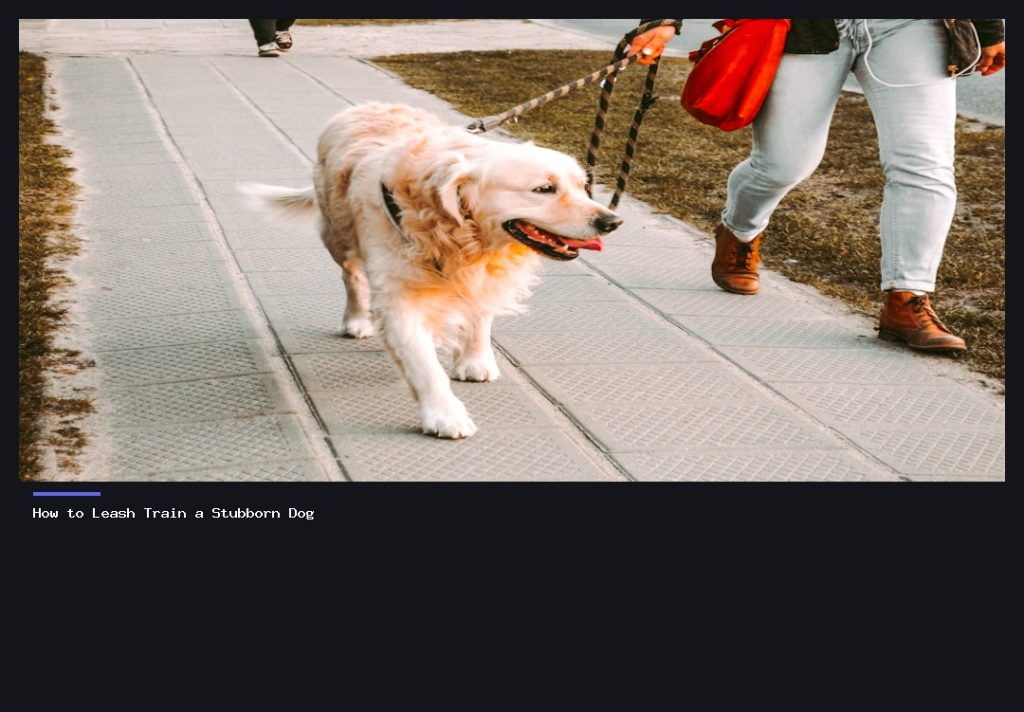
According to the American Kennel Club, consistent positive reinforcement-based leash training practiced in short daily sessions produces measurable behavioral improvements in most dogs within two to four weeks — making structured, reward-based methods the most effective and widely recommended approach for owners of stubborn or reactive breeds.
Key Takeaways
- Stubborn dog behavior often stems from breed instincts, past experiences, or a lack of early socialization — understanding the root cause is the first step toward effective leash training.
- Choosing the right training tools, including the best dog leashes, appropriate training collars, and high-value treats, dramatically improves your chances of success.
- Consistent training methods practiced in short, positive sessions are far more effective than long, frustrating attempts at forcing compliance.
- Positive reinforcement — rewarding desired behavior with treats, praise, or Kong toys — builds trust and accelerates the learning process for even the most difficult dogs.
- Renowned trainers like Cesar Millan emphasize calm, assertive energy and structured routines as essential foundations for leash walking success.
- Setbacks are normal and expected; patience, persistence, and adapting your approach are key components of training a difficult dog.
- Clicker training and other advanced techniques can be powerful additions when standard methods aren’t producing results.
Leash training a stubborn dog is one of the most common challenges owners face, regardless of experience level. Whether your dog plants their paws and refuses to budge, lunges at every passing squirrel, or pulls until your shoulder aches — the frustration is real, but so is the solution. With the right knowledge, tools, and consistent training methods, even the most headstrong dog can learn to walk politely on a leash.
To leash train a stubborn dog, start by choosing the right collar or harness and introducing it gradually using positive reinforcement. Practice in low-distraction environments, reward calm behavior consistently, and keep sessions short. Patience and consistency are essential — most dogs show significant improvement within two to four weeks of daily practice.
Understanding Stubborn Dog Behavior
Before you can effectively address stubborn dog behavior on the leash, you need to understand why certain dogs resist training more than others. “Stubborn” gets thrown around loosely, but what we usually interpret as stubbornness is actually a mix of strong breed instincts, independent thinking, fear, overstimulation, or simple confusion about what’s being asked. Breeds like Basset Hounds, Siberian Huskies, Chow Chows, and Afghan Hounds were historically bred for independent decision-making — traits that made them excellent hunters or working dogs but can make dog obedience training genuinely difficult for their owners (a detail that catches a lot of first-time owners completely off guard).
Past experiences shape how a dog responds to leash training just as much as breed instincts do. Dogs that weren’t properly socialized during their critical developmental window — typically between three and fourteen weeks of age — often show heightened anxiety or reactivity when they encounter the outside world on a leash. Dogs that have been accidentally rewarded for pulling or resisting also learn fast that undesirable behavior gets them what they want. Cesar Millan has long emphasized that dogs respond to energy and leadership; when owners project frustration or uncertainty, dogs mirror that instability — which makes leash walking even harder. Our team has observed this dynamic repeatedly, and identifying the behavioral root cause of your dog’s resistance is essential to choosing the right training approach.
Some leash problems are actually symptoms of broader issues — separation anxiety, lack of exercise, or insufficient mental stimulation (which explains why a dog who seems impossible outdoors can be perfectly calm after a solid play session). A dog that gets enough physical activity and mental enrichment through puzzle toys like Kong toys or interactive play is far more likely to walk calmly on a leash than one bursting with pent-up energy. Looking at your dog’s full lifestyle and emotional state lets you tackle leash training challenges holistically, rather than just managing surface-level symptoms.
Pre-training Preparation
Good preparation before you ever step outside with your dog can mean the difference between a session that builds confidence and one that reinforces bad habits. Start by selecting the right equipment. Not all leashes and collars are created equal — the best dog leashes for training a stubborn dog are typically four to six feet long, made from durable nylon or leather, and comfortable enough for a relaxed grip. Avoid retractable leashes during the training phase. They teach dogs that pulling extends their range, which is precisely the opposite of what you want. A wide range of training-specific leashes and harnesses are available from most pet supply retailers, well-suited for dogs with leash-walking challenges.
Training collars and harnesses can feel overwhelming to choose from, but the key is matching the tool to your dog’s temperament. For heavy pullers, professional trainers often recommend a front-clip harness because it redirects the dog’s forward momentum toward you (rather than letting them use their chest like a freight train). Head halters like the Gentle Leader are another solid option for strong pullers, giving you direct control over head direction. You should introduce any new collar, harness, or tool gradually and positively — let your dog sniff and investigate the gear, then pair it with high-value treats so they connect the equipment with something rewarding rather than something threatening.
Beyond equipment, pre-training preparation means setting both you and your dog up for environmental success. Start training sessions indoors or in a quiet, low-distraction spot like a fenced backyard. Trying to leash train a stubborn dog in a busy park during early stages is a recipe for frustration — a mistake our team sees new owners make constantly. Stock up on small, high-value treats; soft, smelly options like chicken, cheese, or commercial training treats tend to keep distracted dogs most engaged. If you plan to use clicker training, spend a few minutes “charging” the clicker by pairing each click with a treat so your dog understands the sound marks correct behavior. Gathering your tools, choosing your environment, and committing to a patient and consistent approach are the three pillars of solid pre-training preparation.
Step-by-step Leash Training Guide
Once you understand your dog’s behavior and have your tools ready, it’s time to start the actual training. The first step is leash introduction — clip the leash to your dog’s collar or harness and let them drag it around the house under supervision for short periods. This gets your dog used to the feeling of something attached to them without the added pressure of being directed anywhere. Once your dog moves freely and calmly with the leash on, pick up your end and practice following your dog around indoors, keeping the leash loose and rewarding calm movement with treats and verbal praise. This stage is purely about building a positive association with the leash, not yet about directing behavior.
The next phase is teaching your dog to walk beside you — what trainers call loose-leash walking. Work in your low-distraction environment and hold a treat near your hip to encourage your dog to position themselves next to you (this hip-treat trick works faster than most people expect). Take a few steps forward; if your dog walks alongside you and keeps the leash loose, mark the behavior immediately with a click or a verbal “yes” and deliver the treat. When your dog pulls ahead or to the side, stop completely and wait. Don’t yank the leash or drag your dog back — just become a statue. The moment your dog returns to your side and the leash goes slack, resume walking and reward generously. This stop-and-go method, sometimes called the “be a tree” technique, is one of the most widely recommended approaches among professional trainers and dog behavior experts.
As your dog starts to grasp loose-leash walking in a controlled setting, gradually raise the distraction level and extend your sessions. Move from the backyard to a quiet sidewalk, then a neighborhood street, and eventually more stimulating environments like a park. Keep sessions short — five to ten minutes for puppies, ten to fifteen for adult dogs — to prevent mental fatigue. If your dog attends group training classes, ask the instructor for specific exercises that reinforce what you’re practicing at home. Celebrate small wins: a dog that walks calmly for thirty seconds without pulling is making real progress, even when it doesn’t feel that way. Our team has watched consistent daily training transform even the most resistant dogs into reliable leash-walking companions — the results really do compound over time.
Common Mistakes to Avoid
Even the most well-intentioned owners sabotage their own progress by repeating a handful of avoidable errors. Catching these mistakes early saves you weeks of frustration — and keeps your dog from locking in bad habits that become genuinely difficult to undo later.
One of the most damaging mistakes is letting pulling go uncorrected even once. Dogs learn through repetition and consequence. Every single time your dog pulls forward and you follow, you’re teaching them that pulling works. Inconsistency is the enemy of progress. If you stop walking when your dog pulls on Monday but let it slide on Wednesday because you’re in a hurry, your dog gets a mixed signal. The behavior gets reinforced on an unpredictable schedule — which makes it more persistent, not less. Commit to the same response every single time the leash goes taut.
Leash Corrections and Physical Tension
Many owners instinctively jerk or yank the leash when their dog lunges or pulls. This causes more problems than it solves. Physical corrections can trigger an opposition reflex — a natural biomechanical response where the dog pushes back against pressure. You pull back, they pull harder. Over time, repeated leash corrections can also build anxiety and leash reactivity, turning a dog that simply pulled into one that barks and lunges at other animals or people (a pattern that’s far harder to unwind than the original pulling). The ASPCA’s dog care guidelines specifically caution against aversive leash handling for exactly this reason.
Choosing the wrong equipment is another common trap. Retractable leashes teach dogs that constant tension is normal, which directly contradicts loose-leash training goals. A standard four-to-six-foot nylon or leather leash paired with a front-clip harness like the PetSafe Easy Walk works far better for stubborn dog behavior. Training collars such as prong collars or choke chains should only be used under direct guidance from a certified professional — never as a first-line tool for a frustrated beginner.
Training sessions that run too long are a silent progress-killer. Dogs, especially stubborn ones, hit a mental wall fast. Once your dog stops responding, continuing the session teaches them to tune out cues. End every session on a small win, even if you have to make the task easier to get there. Five successful repetitions beat thirty frustrated ones every time.
Effective Use of Positive Reinforcement
Positive reinforcement isn’t simply handing out treats at random. Timing, consistency, and treat value all determine whether the technique actually shapes the behavior you want. The reward needs to arrive within one to two seconds of the desired behavior — wait any longer and your dog connects the treat to whatever they were doing at the moment of delivery, not the action you meant to reward.
Clicker training is one of the most precise positive reinforcement tools available. The click sound acts as a bridge, marking the exact moment your dog performs correctly before the treat arrives. The American Kennel Club recommends clicker training as a highly effective method for teaching dogs new behaviors because of its mechanical precision. Pair the clicker with treats your dog genuinely loves — Kong Stuff’N Snacks or small cubes of string cheese often outperform standard kibble for stubborn dogs who need a stronger incentive to stay engaged.
Verbal praise also plays a supporting role. Use a consistent, upbeat marker word like “yes” or “good” every time your dog walks calmly beside you. Over time, your voice itself becomes a conditioned reinforcer, meaning you can use it to reward good behavior even when treats aren’t immediately on hand. Vary your rewards occasionally — mix treats with a quick game of tug or an enthusiastic petting session — to keep your dog guessing and engaged throughout each session.
Dealing with Setbacks
Setbacks are not failures. They’re a normal, expected part of training any dog, especially one with a stubborn temperament. A dog that walked beautifully last week may suddenly pull relentlessly this week. A change in environment, a new distraction, an off day from illness, or even a shift in your own energy can all disrupt progress temporarily.
When a setback happens, resist the urge to push through it by increasing pressure or extending the session. Go back to the last level where your dog was succeeding. If your dog is struggling on a busy street, return to the quiet backyard. Rebuilding confidence at an easier level restores momentum faster than grinding through a hard scenario — a detail most owners overlook when they’re frustrated. Cesar Millan frequently stresses the importance of calm, assertive energy from the handler. If you walk into a session tense or irritated, your dog will mirror that state and things will fall apart quickly.
Adjusting Your Training Plan
Sometimes a setback signals that your current approach needs adjustment rather than just more repetition. If your dog has been pulling consistently for two or more weeks despite daily practice, ask yourself whether your reward value is high enough, whether sessions are running too long, or whether an underlying issue like leash reactivity or anxiety needs professional support. Enrolling in dog training classes with a certified trainer connects you with a professional who can watch your dog in real time and spot gaps that are invisible to you as the handler.
Track your progress in a simple notebook or phone app. Note the date, location, session length, and any specific behaviors that improved or regressed (our team has found that even two weeks of notes can reveal surprisingly clear patterns). Those patterns often show exactly where the training is breaking down. Consistent methods applied with patience and a willingness to adapt will always outperform rigid routines that ignore what the dog is actually communicating. Every stubborn dog has a threshold — your job is to find it, respect it, and work just below it until their confidence and reliability grow strong enough to push that boundary further.
The Importance of Consistency
Consistency is the single most powerful variable in leash training a stubborn dog. Without it, even the best techniques collapse. Dogs learn through repetition and pattern recognition — a detail most pet owners underestimate until weeks of progress disappear overnight. When the rules shift — pulling gets ignored on Tuesday but corrected on Thursday — your dog can’t build a reliable picture of what you expect. Confusion breeds frustration, and frustrated dogs fall back on whatever worked before, which usually means pulling harder.
Every person who handles your dog must follow the same rules. If you enforce a loose-leash standard but your partner lets the dog drag them down the driveway, your training loses ground every single time. The Association of Professional Dog Trainers (APDT) recommends briefing all household members on the exact cues, reward markers, and correction methods before any group walk takes place. Getting everyone on the same page accelerates progress dramatically.
Building a Daily Training Routine
Short, frequent sessions beat long, irregular ones every time. Aim for two to three sessions of five to ten minutes each day rather than one thirty-minute marathon. Stubborn breeds hit mental fatigue fast (faster than most owners expect). Once fatigue sets in, dogs stop processing new information and just react out of habit. Keeping sessions brief and ending on a success keeps your dog fresh and genuinely motivated the next time you pick up the leash.
Set a specific time each day for training — before the morning walk or right after dinner both work well. Predictable timing conditions your dog to expect a focused interaction, which primes their brain for learning. Track each session, even a quick phone note about what worked and what didn’t. Patterns emerge over one to two weeks that help you sharpen your approach. Consistent daily practice, even imperfect practice, will always outperform occasional perfect sessions.
Consistency also means holding your criteria. If your standard is that the leash must stay loose before the walk continues, hold that standard on every walk — rainy days, rushed mornings, and tired evenings included. Stubborn dogs are expert negotiators (and they have much more patience than you’d think). They’ll test boundaries repeatedly, and the moment you give in once, they learn that persistence pays off. Stay calm, hold your line, and your dog will eventually accept that the rules aren’t up for debate.
Advanced Techniques for Difficult Cases
Some dogs need more than standard loose-leash protocols. Dogs with deep-rooted leash reactivity, extreme prey drive, or a long history of reinforced pulling need a structured, layered approach that goes well beyond basic treat-and-praise methods. These dogs aren’t untrainable — they simply need a more deliberate strategy and, in many cases, specialized equipment.
The pattern game, developed by trainer Leslie McDevitt as part of her Control Unleashed program, works especially well for reactive and easily overstimulated dogs. The exercise teaches your dog to disengage from triggers and check back in with you on cue. Start in a low-distraction environment. Walk toward a mild trigger, stop before your dog reacts, then wait for them to look back at you voluntarily — mark and reward that check-in immediately. Repeat until the check-in becomes automatic. Over several weeks, gradually close the distance from the trigger as your dog’s threshold improves.
Using Management Tools Strategically
For physically strong dogs that are hard to control, a front-clip harness like the Ruffwear Front Range or the PetSafe Easy Walk Harness redirects pulling energy toward you rather than forward. These tools don’t train the dog on their own, but they reduce physical strain while training is underway — which keeps sessions safer and more productive. Head halters like the Gentle Leader are another solid option for large, powerful breeds. Used correctly, a Gentle Leader gives you steering control without any pressure on the throat.
Clicker training adds real precision to advanced work. The sharp, consistent sound of a clicker — widely available at most pet supply stores — marks the exact moment of correct behavior with a clarity that verbal cues sometimes can’t match. Pair clicks with high-value rewards like small pieces of cooked chicken or soft commercial treats to build a strong conditioned response. For dogs with severe leash reactivity, consider working with a Certified Applied Animal Behaviorist (CAAB) who can assess whether desensitization and counter-conditioning is needed before standard leash training can succeed.
Pattern Interruption for Persistent Pullers
The penalty yards method works well for dogs that pull consistently in one direction. Every time your dog pulls, turn and walk the opposite way — no hesitation, no verbal correction. No scolding, no leash jerking, just a calm and immediate change of direction. Your dog quickly learns that pulling never gets them closer to what they want. This method demands patience and physical commitment, but most dogs respond within two to three weeks of daily practice when applied without exception (which is the part most people struggle with).
Another advanced tool is the two-reward system. Reward your dog both for walking beside you and for choosing to disengage from a distraction. Our team has found this dual reinforcement approach especially effective because it teaches dogs that staying with you beats chasing a squirrel or lunging at another dog. Use a higher-value treat for disengagement than for general loose-leash walking — disengaging from a trigger takes more impulse control, and that deserves a bigger payoff.
Additional Resources and Training Tools
The right tools genuinely shorten the learning curve. Leash training doesn’t have to be a solo effort — a wide range of books, classes, equipment, and professional services exist specifically to support owners working with stubborn or difficult dogs.
For reading material, The Other End of the Leash by Patricia McConnell is one of the most practical, science-backed books available on dog behavior and communication. McConnell, a certified applied animal behaviorist, explains why dogs behave the way they do and how human body language either supports or undermines training. Control Unleashed by Leslie McDevitt is another excellent resource — particularly useful for reactive dogs, a detail many reading lists skip over. Both titles are widely available through Amazon and most public library systems.
Recommended Equipment for Leash Training
- PetSafe Easy Walk Harness — front-clip design reduces pulling without causing discomfort
- Ruffwear Front Range Harness — durable, padded option for active or strong dogs
- Gentle Leader Head Halter — provides steering control for large breeds
- Standard clicker — available at most pet supply stores, pairs with treat rewards for precision marking
- Six-foot flat leash — the standard training leash recommended by the Association of Professional Dog Trainers
- Treat pouch — a hands-free pouch like the Doggone Good Rapid Reward Pouch keeps rewards accessible during walks
- Kong Classic or Kong Wobbler — useful for mental enrichment between sessions to reduce pent-up energy before walks
Professional Training Classes and Services
Group training classes offer structured environments with certified trainers, plus the added benefit of real-world distraction exposure (which is often the hardest part to replicate at home). Force-free group programs use methods aligned with modern behavioral science and typically run from beginner through advanced levels. Many locations also run reactive dog workshops designed specifically for dogs that struggle in standard group settings.
Private training is the most efficient option for dogs with significant behavior problems. A one-on-one session with a Certified Professional Dog Trainer (CPDT-KA) typically costs between $75 and $150 per hour but delivers targeted feedback that group classes simply can’t replicate. Search the APDT’s trainer directory or the Certification Council for Professional Dog Trainers (CCPDT) database to find a qualified professional near you. Online video consultations are also widely available — a practical backup when in-person services are limited in your area.
Frequently Asked Questions
How long does it take to leash train a stubborn dog?
Most dogs show meaningful improvement within two to four weeks of consistent daily practice. Stubborn breeds or dogs with deeply ingrained pulling habits may need eight to twelve weeks to reach reliable loose-leash walking. Your progress depends on session frequency, reward value, and how consistently every handler enforces the rules across different environments. Track each session briefly so you can spot patterns and adjust before a plateau drags on too long.
Can an older dog learn to walk politely on a leash?
Yes, older dogs can absolutely learn new leash behaviors — the idea that you can’t teach an old dog new tricks isn’t supported by modern behavioral science. Your older dog may take slightly longer to unlearn established habits, but the same positive reinforcement techniques that work for puppies apply equally well to adult and senior dogs. Start with very short sessions of three to five minutes, use high-value treats, and be patient with the pace of progress.
Should you use a retractable leash during training?
Avoid retractable leashes during the training process entirely. They teach your dog that pulling extends the leash and creates more freedom — which directly reinforces the exact behavior you’re trying to eliminate. Use a standard six-foot flat leash for all training sessions, and save any retractable leash for open, low-distraction spaces only after your dog has mastered loose-leash walking reliably. The consistent tension feedback from a flat leash gives your dog much clearer information about what you expect.
How do you stop a dog from lunging at other dogs on the leash?
Start by identifying your dog’s reaction threshold — the distance at which they first notice another dog but haven’t yet started lunging. Work at that distance using counter-conditioning: mark and reward your dog with a high-value treat the moment they notice the other dog but stay calm. Gradually decrease the distance over multiple sessions as your dog’s response improves. If lunging is severe or accompanied by aggression (a combination that escalates faster than most owners expect), consult a Certified Applied Animal Behaviorist before continuing on your own.
Does the type of collar or harness affect training results?
Your equipment choice directly influences how quickly your dog learns. Front-clip harnesses like the PetSafe Easy Walk redirect pulling energy toward you, making it physically easier to maintain loose-leash criteria while training is still in progress. Standard flat collars work well for dogs with mild pulling habits, while head halters like the Gentle Leader offer additional control for large, powerful breeds. Our team strongly advises avoiding choke chains and prong collars unless you’re working directly under a qualified professional’s supervision, as improper use can cause injury and increase anxiety.
How do you keep a dog focused during leash training in a distracting environment?
Start every new environment at the lowest distraction level possible, then build up gradually. Before entering a busy area, run a short focus exercise in a quiet spot — ask for eye contact, reward it, then proceed. Use your highest-value treats specifically for distracting environments, so your dog learns that the busiest places produce the best rewards (a simple association that pays off surprisingly fast). Keep sessions short in new locations, ending before your dog loses focus, and return to the same spot several times before increasing the distraction level.