Key Takeaways
- Driving is typically cheaper than flying with pets, especially for trips under 500 miles, when factoring in airline pet fees that can range from $95 to $200 each way on carriers like Delta Airlines and American Airlines.
- Flying with pets in-cabin costs significantly less than cargo transport, but not all breeds and sizes qualify for in-cabin travel under US Department of Transportation guidelines.
- A 500-mile road trip with a pet can cost between $80 and $200, while the same journey by air could cost $300 to $600+ when pet fees, carrier requirements, and vet documentation are included.
- Hidden costs such as pet-friendly hotel stays, health certificates, and pet travel insurance can dramatically shift the affordability balance between flying and driving.
- The ASPCA strongly recommends that pet owners consider their animal’s temperament, size, and health before choosing any long-distance pet travel method.
- Pet transport services like PetSafe (operated by American Airlines Cargo) offer dedicated solutions for larger animals that cannot travel in-cabin.
- Affordable pet travel is achievable with proper planning, early booking, and a thorough understanding of all associated pet travel expenses.
Introduction to Pet Travel Cost Comparison
Millions of American pet owners face the same question every year when a trip comes up: is it cheaper to fly or drive with pets? Whether you’re relocating across the country, heading to a vacation spot, or visiting family a few states over, bringing your pet along adds a whole new layer of financial and logistical complexity. Pet travel cost is never a one-size-fits-all calculation. Distance, your pet’s size and breed, airline policies, fuel prices, and plenty of other variables can stack up fast if you’re not prepared.
The world of traveling with pets has shifted quite a bit in recent years. Pet-friendly airlines have updated their policies, cargo restrictions have tightened after high-profile incidents, and road trip culture has taken off among pet owners who want their animals close and comfortable. According to the American Pet Products Association, nearly 70% of U.S. Households own a pet. A growing number of those owners now choose to travel with their animals rather than leave them behind. Getting a clear picture of all pet travel expenses — airline pet fees, health certificates, gas, pet-friendly accommodations, and pet travel insurance — is essential before booking a ticket or packing a bag.
Driving is generally cheaper than flying with pets for trips under 800 miles. Airline pet fees from carriers like Delta Airlines and American Airlines range from $95 to $200 each way (see our guide to the best airlines for pet travel), while a comparable road trip typically costs $80 to $150 in fuel and supplies, making driving the more affordable option for most pet owners.
Cost Breakdown and Budgeting
Smart pet travel decisions start with the full picture, not just the ticket price. Flying means accounting for the airline’s pet fee charged per pet and per direction, an airline-approved carrier, a veterinary health certificate required within 10 days of travel, and possibly pet travel insurance. These costs stack up fast. What looks like a reasonable plane ticket can become a genuinely expensive trip, especially for multi-pet households or anyone flying a larger animal through cargo services like PetSafe.
Driving brings its own set of costs. Fuel is the obvious one, but road trippers also need to budget for pet-friendly hotel stays with deposits or nightly surcharges ranging from $25 to $75, food and water stops, travel-sized supplies, and vehicle wear-and-tear. A 500-mile trip at 30 miles per gallon with gas at about $3.50 per gallon runs about $58 in fuel alone. Add one overnight stay at a pet-friendly hotel at $120 with a $30 pet fee, meals, and miscellaneous supplies, and the total lands between $150 and $250. Flying that same 500-mile route in-cabin on American Airlines tells a different story. A base ticket averages $150 to $250, the one-way pet fee runs $150, and a vet health certificate adds $50 to $75, pushing the total to roughly $350 to $475 for one passenger with one pet. The numbers favor driving, at least over shorter distances. Understanding the true cost of traveling with pets is the foundation of every smart travel decision.
Sample Budget Comparison: 500-Mile Trip with One Pet
| Expense Category | Driving | Flying (In-Cabin) |
|---|---|---|
| Base Transportation Cost | $58 (fuel) | $150–$250 (ticket) |
| Pet Fee | $0 | $95–$200 |
| Carrier / Crate | $0–$40 | $30–$60 |
| Vet Health Certificate | $0 | $50–$75 |
| Overnight Accommodations | $120–$175 | $0 |
| Estimated Total | $178–$273 | $325–$585 |
For a 500-mile journey, driving with a pet can cost 40% to 60% less than flying, depending on the airline, route, and accommodation choices. That calculation reflects one traveler with one pet. Families traveling together may find that per-person airfare becomes more competitive when split across multiple passengers, while driving costs stay relatively fixed regardless of group size. The ASPCA also reminds pet owners that long car rides stress certain animals, particularly anxious dogs or cats unaccustomed to vehicles. That stress can introduce extra costs: calming supplements, vet consultations, or professional pet transport if an animal simply cannot handle the journey. Budgeting for pet travel takes both a financial spreadsheet and an honest look at your pet’s individual needs.
Flying with Pets: Expenses and Considerations
American Airlines charges $125 each way for an in-cabin pet. Delta Airlines sets its in-cabin pet fee at $95 per segment. These fees apply per carrier, not per pet, so one small dog or cat on a round-trip domestic flight costs at least $190 to $250 in pet fees alone. That figure sits entirely on top of base airfare, which ranges from $150 to $400 depending on route and booking window.
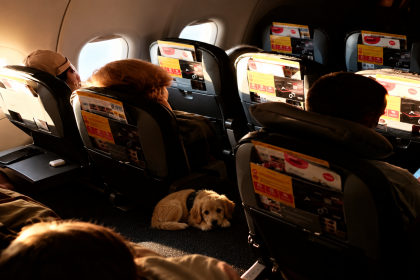
Only small pets that fit inside an approved soft-sided carrier under the seat qualify for in-cabin travel. Carriers must meet strict size requirements. Delta requires carriers no larger than 18 x 11 x 11 inches, and American Airlines enforces a 20-pound combined limit for pet plus carrier. Pets exceeding those limits must travel as checked baggage or air cargo through a separate freight service, which brings a completely different cost structure. Checked pet fees typically run $200 per segment on major carriers. Cargo transport through a service like Delta Cargo’s Live Animal program can cost $300 to $600 or more depending on crate size and destination. For a full breakdown of cargo costs, see our guide on how much it costs to fly a large dog.
Health Certificates and Regulatory Requirements
The US Department of Transportation requires airlines to follow specific animal welfare standards, but individual carriers set their own documentation rules. Most major airlines require a USDA-accredited veterinarian to issue a health certificate dated within 10 days of departure. That vet visit typically costs $50 to $75. Some practices charge an additional $15 to $30 certificate fee on top of the exam. International travel makes certificate requirements significantly more complex and expensive, often requiring USDA endorsement that adds another $38 per document.
Beyond the certificate, some airlines enforce breed restrictions that catch pet owners off guard. Both Delta and American Airlines prohibit brachycephalic breeds like French Bulldogs, Pugs, and Persian cats from cargo holds due to respiratory risk at altitude. The ASPCA strongly advises against flying any pet in cargo unless absolutely necessary, citing risks of extreme temperatures, rough handling, and stress-related health events. These restrictions push some pet owners toward costlier alternatives, including professional ground transport services.
Travel anxiety medication prescribed by a veterinarian adds another line item to the flying budget. A standard prescription of trazodone or gabapentin for a medium-sized dog costs about $15 to $40. The required pre-travel vet consultation to get that prescription typically runs $60 to $90. Pet travel insurance through providers like Nationwide or Petplan can offset some emergency costs, but standard policies do not cover routine travel fees or health certificates. Add all of these costs together, and a single one-way in-cabin flight with a pet realistically runs $350 to $500 before counting your own ticket.
Driving with Pets: Cost and Convenience
A 500-mile road trip in a vehicle averaging 30 miles per gallon costs about $58 in fuel at the national average gas price of $3.50 per gallon as of mid-2024. That number scales directly with distance, so a 1,000-mile drive doubles to about $116. Driving adds zero pet-specific fees. Dogs and cats ride free, with no carrier size restrictions, no health certificate requirements for domestic travel, and no breed bans to navigate.
The cost advantages of driving go well beyond avoiding airline pet fees. Road trips let you pack your pet’s regular food, water bowls, bedding, and comfort items without worrying about weight limits or checked baggage fees. Familiar scents reduce anxiety in many animals, which means fewer behavioral issues and potentially no need for prescription sedatives. PetSafe and Ruffwear both manufacture vehicle-specific harnesses and crash-tested crates that keep pets safe on the road. A Ruffwear Load Up Harness retails for about $50 and meets Center for Pet Safety crash test standards, making it a one-time purchase that covers many future trips.
Hidden Road Trip Costs to Account For
Overnight accommodations are the largest variable in road trip budgeting. Pet-friendly hotel chains like La Quinta and Kimpton typically charge $25 to $75 per night in pet fees, though some properties cap the total per stay. A two-night drive covering 1,000 miles could add $50 to $150 in pet accommodation charges alone. Booking through BringFido.com helps identify hotels with low or waived pet fees, which can meaningfully cut this cost.
Food and rest stop supplies add up on longer drives. Budget $10 to $20 for portable water bottles, collapsible bowls, and travel-sized waste bags if you do not already own them. Toll roads on major interstate corridors add another $10 to $40 depending on the route. Despite these extras, driving remains the more affordable option for most single-pet travelers. Beyond the savings, driving offers one advantage flying simply cannot match: complete flexibility. Travelers set the schedule, control the temperature, stop whenever the pet needs a break, and arrive with a calm animal rather than a stressed one pulled from a cargo hold.
Real Cost Calculator: Fly vs Drive
Use this specific scenario to ground the numbers: a solo traveler flying one-way from Chicago O’Hare to Dallas Fort Worth with a 20-pound Beagle, compared to driving the same 920-mile route in a sedan averaging 32 miles per gallon.
Flying Cost Breakdown for This Trip
A mid-range economy ticket on American Airlines for this route averages $180 to $220 as of 2024. The Beagle at 20 pounds exceeds American Airlines’ 20-pound combined pet-plus-carrier in-cabin limit. That means the dog must travel as checked baggage or cargo. American Airlines charges $150 each way for checked pets. A USDA-compliant hard-sided crate large enough for a Beagle, such as the Petmate Sky Kennel in size medium, costs about $65 if you don’t already own one. For help choosing the right crate, see our airline-approved crate guide.
A health certificate from a licensed vet runs $45 to $85. Per USDA APHIS regulations, it must be issued within 10 days of travel. A vet consultation for anxiety medication adds $75, plus a gabapentin prescription at $20. Rideshare costs to and from the airport run another $40 to $60 each way. The total one-way flying cost lands at about $595 to $695, not counting airport meals or parking.
Driving Cost Breakdown for the Same Trip
At $3.50 per gallon and 32 miles per gallon, the 920-mile drive burns roughly 28.75 gallons. That comes to about $100 in fuel. The Beagle rides for free. Domestic road travel requires no health certificate. A crash-tested harness like the Ruffwear Load Up costs $50 and covers every future trip as a one-time purchase.
One overnight hotel stay splits the drive comfortably. A pet-friendly La Quinta along Interstate 44 typically charges $89 to $120 per night plus a $25 pet fee. Tolls on the I-44 corridor average $15 to $20. Road snacks, portable water supplies, and waste bags add another $15. Total driving costs for this trip run about $265 to $310. Driving saves the traveler $330 to $385 compared to flying this specific route.
The Break-Even Point Between Flying and Driving
Flying becomes more cost-competitive on trips exceeding 1,500 miles, especially when your pet qualifies for in-cabin travel. Delta Airlines charges $95 each way for in-cabin pets. Small dogs under 15 pounds combined with carrier can fly in-cabin on most domestic routes. On a 1,500-mile trip, fuel alone costs roughly $164 for a 32 MPG vehicle. Two overnight hotel stays add $250 to $300 in lodging and pet fees, pushing total driving costs to $430 to $480. That narrows the gap considerably when a $95 Delta pet fee gets added to a $200 base fare.
The break-even threshold also shifts based on how many people share the drive. Two travelers splitting fuel and hotel costs cuts the per-person driving expense nearly in half. A family of four driving a minivan that gets 24 MPG faces higher fuel costs but spreads them across multiple passengers. Driving often wins on total cost even on 2,000-mile trips.
Factors Influencing Your Travel Decision
Distance is the most objective factor in the fly-versus-drive calculation. Still, five additional variables frequently override the raw numbers when traveling with pets.
Pet Size, Breed, and Health Conditions
The ASPCA advises against air travel for brachycephalic breeds entirely, including Bulldogs, Pugs, Persian cats, and Boston Terriers. Delta Airlines and American Airlines both restrict these breeds from cargo holds due to documented respiratory risks at altitude. For pets in this category, driving isn’t just cheaper. It’s the only responsible choice for long-distance travel.
Older pets with heart conditions, joint problems, or chronic anxiety face added risks in pressurized cargo holds. A senior dog that sleeps through a six-hour car ride may show dangerous stress responses inside an unfamiliar cargo environment. A vet’s assessment carries more weight than any cost comparison spreadsheet when a pet’s health is part of the equation.
Trip Duration and Your Personal Schedule
A 500-mile trip takes about eight hours to drive or three hours to fly, including check-in time. Travelers with strict deadlines save five hours by flying. Remote workers or retirees with flexible schedules can use those same five hours to bond with a pet, stop at rest areas, and skip the stress of airport security lines entirely.
Multi-pet households tip the math sharply toward driving. Airlines charge per animal, so two pets flying with Delta generate $190 in pet fees before counting crates or health certificates. Three pets flying could add $285 to $450 in fees on top of ticket prices. A minivan carrying three dogs pays zero in pet transport fees, regardless of distance.
Destination Accessibility and Pet-Friendly Infrastructure
Some destinations simply lack practical driving routes. Hawaii requires flying for obvious geographic reasons, and the Hawaii Department of Agriculture enforces a strict rabies quarantine program that adds significant cost and stress regardless of transport method. Alaska presents similar challenges for travelers from the continental United States. For these destinations, flying is the only option. Budgeting accordingly from the start prevents financial surprises.
Urban destinations with limited parking add hidden costs to road trips that rural destinations don’t. Parking a car in Manhattan for a week costs $300 to $500, which erases most of the savings from avoiding airline pet fees. Evaluate your destination’s parking infrastructure as part of the total cost calculation, not just the travel segment itself.
Safety and Comfort Tips for Pet Travel
The ASPCA recommends acclimating your pet to their carrier at least two weeks before any trip, whether flying or driving. Place familiar bedding and a worn t-shirt inside the crate so your pet connects it with safety rather than confinement. Short daily practice sessions in the carrier reduce anxiety significantly by departure day.
Hydration management differs sharply between flying and driving. On a road trip, you control every stop and can offer water every two to three hours. Cabin air on flights is extremely dry, and pets in cargo holds have limited water access for the entire duration. Freeze water in the bowl attached to your pet’s crate so it melts slowly during the flight rather than spilling during loading. The US Department of Transportation requires airlines to provide food and water to pets held in cargo beyond 12 hours, but shorter flights carry no such mandate.
Feeding schedules matter on both transport types. Avoid giving your pet a large meal within four hours of departure. A full stomach raises nausea risk during turbulence or winding mountain roads. Offer a small, familiar meal six hours before travel and pack enough food for the full journey plus one extra day as a buffer.
Restraint and Identification During Travel
Crash-tested pet harnesses and secured crates reduce injury risk during sudden stops or turbulence. The Center for Pet Safety has independently tested harnesses and crates, and results show that many popular soft-sided carriers fail at collision speeds above 30 mph. For road trips, use a carrier secured by a seatbelt or a harness rated by an independent testing organization rather than trusting marketing claims alone.
Microchipping your pet before any long-distance trip is non-negotiable. A collar tag can fall off, but a microchip registered with the American Animal Hospital Association’s PetLink database provides a permanent identification link. Update your contact information in the registry before departure. Carry a recent photo of your pet on your phone so you can act fast if separation happens at a rest stop or airport.
PetSafe airline-approved carriers meet IATA container requirements and include ventilation on all four sides, which improves airflow during cargo transport. For detailed crate selection guidance, see our large dog travel crate guide. For road trips, PetSafe also makes crash-tested vehicle barriers and seat covers that protect both your pet and your upholstery. Buying quality equipment once pays off across every future trip.
Conclusion: Making an Informed Decision
Driving beats flying on pure cost for most trips under 1,000 miles when your pet weighs over 20 pounds. Airline pet fees from carriers like Delta Airlines and American Airlines range from $95 to $200 each way for in-cabin pets. Cargo fees for larger dogs often exceed $300 per segment. A road trip eliminates those fees entirely and gives you full control over your pet’s comfort, feeding schedule, and rest stops.
Flying makes financial and practical sense in specific scenarios. Trips over 1,500 miles favor air travel, especially when driving would require multiple hotel nights. Destinations unreachable by road also tip the scales toward flying. Calculate the true cost of your time, not just fuel and fees, before defaulting to driving as the automatic budget choice.
Pet size remains the most decisive variable in this comparison. Small pets flying in-cabin experience far less stress than large dogs in cargo holds. The cost difference between flying and driving also narrows considerably for small-breed owners. Large dog owners almost always save money driving, and they protect their pet from the documented risks of cargo travel at the same time.
Health and breed restrictions add a layer that no spreadsheet can fully capture. Brachycephalic breeds, senior pets, and animals with chronic health conditions belong in a car rather than a cargo hold. This holds true regardless of what the numbers suggest. Your veterinarian’s travel clearance should be the first step in your planning process, not an afterthought. For a complete pre-flight preparation checklist, see our guide on how to prepare your dog for long flights.
Build your budget using real numbers specific to your route, your airline, and your pet’s weight class. Compare the total cost of flying against the total cost of driving, including fuel, tolls, hotels, and food for both you and your pet. The answer will differ for every trip. The framework, though, stays consistent: gather all costs, weigh them against your pet’s specific needs, and choose the option that protects both your budget and your animal’s wellbeing.
Frequently Asked Questions
How much does it typically cost to fly with a dog on a domestic flight?
Most major US airlines charge between $95 and $125 each way for in-cabin pets. Cargo fees for larger dogs range from $200 to $500 per segment, depending on the airline and crate size. Budget an extra $50 to $100 for a health certificate from your vet, which must be issued within 10 days of travel. Check your airline’s pet policy page directly, since fees and breed restrictions change frequently.
Can you bring a cat on a road trip without a carrier?
Always secure your cat in an approved carrier during road travel. A loose cat can distract the driver and suffer serious injuries during sudden stops. The ASPCA recommends a hard-sided carrier secured by a seatbelt in the back seat for maximum safety. Place a familiar blanket inside and drape a light cloth over part of the carrier to cut down on visual stimulation and keep stress levels low throughout the drive.
Does pet travel insurance cover airline fees if a flight is canceled?
Standard pet travel insurance from providers like Nationwide or Trupanion covers vet costs tied to illness or injury during travel. What it generally won’t cover is airline pet fees for canceled flights. For that kind of reimbursement, you need travel insurance with a pet-specific rider — Allianz offers this on select plans. Read the policy exclusions carefully before buying, and confirm your travel dates and pet species are covered.
How do you keep a dog calm during a long car ride?
Run short 15 to 20 minute practice drives in the weeks before the trip. Doing this helps your dog connect the car with positive experiences rather than just vet visits. A crate or crash-tested harness adds physical security on the road. Bring your dog’s favorite toy and a piece of worn clothing to reinforce a sense of familiarity. For dogs with severe travel anxiety, a vet can recommend short-term anti-anxiety medications approved for canine road travel.
Are there weight limits for pets flying in the cabin of a plane?
Yes, most airlines require that your pet and carrier together weigh no more than 20 pounds for in-cabin travel. Dogs over that limit must fly as checked baggage or cargo. That route carries extra fees and real health risks, especially for brachycephalic breeds. Weigh your pet and carrier together before booking, then call the airline to confirm weight and size limits for the specific aircraft on your route.
How far in advance should you book pet-friendly travel accommodations?
For standard travel periods, book pet-friendly hotels at least four to six weeks out. Around holidays or peak summer travel, push that to three or four months ahead. Hotels often cap how many pet-friendly rooms they offer per night, and last-minute searches can leave you stranded in unfamiliar areas. Use BringFido or GoPetFriendly to find and reserve verified pet-friendly properties along your route before locking in your departure date.