
Key Takeaways
- Pet-proofing your home is a critical step in preventing accidents, injuries, and fatalities among household pets.
- Every room in your home — from the kitchen to the bathroom — contains potential hazards that require targeted animal-proofing strategies.
- Selecting pet-safe furniture and decor reduces both physical risk to your pets and costly damage to your belongings.
- The ASPCA and PetSafe offer valuable resources and products to help homeowners build a comprehensive pet-proofing checklist.
- Non-toxic plants, pet-friendly cleaning products, and strategically placed baby gates are among the most effective home safety tools for pets.
- Pet-proofing is an ongoing process that evolves as your pet ages, grows, and develops new behaviors.
- Combining environmental changes with guidance from animal behaviorists creates the most effective long-term pet safety measures.
Introduction to Pet-Proofing Your Home
Bringing a pet into your home is one of the most rewarding decisions you can make — but it comes with a real responsibility. You need to make sure your living space is actually safe for your new companion. Pet-proofing your home means systematically finding and eliminating hazards that could harm animals. It’s just as essential as feeding, grooming, or veterinary care. According to the ASPCA, thousands of pets are rushed to emergency veterinary clinics each year due to household accidents that were entirely preventable. From toxic substances left within reach to unstable furniture that can topple, the dangers inside an average home are far more numerous than most pet owners expect.
Whether you’re welcoming a curious kitten, an energetic puppy, or an older rescue animal, home safety for pets never stops mattering. Pets explore the world through their senses — sniffing, chewing, climbing, and squeezing into tight spaces. Pet-proofing isn’t a one-time task. It’s a continuous process that adapts as your pet grows, your household changes, and new products or furnishings come through the door. This guide walks you through every aspect of creating a truly pet-friendly home, from room-by-room danger zones to budgeting for the right pet care home solutions.
Identifying Common Hazards in Each Room
One of the most important things to understand about pet hazard prevention is that danger doesn’t live in just one spot. It’s spread across every room — often hiding in plain sight. The kitchen, for example, is one of the most hazardous spaces for pets. Cleaning products stored under the sink, foods like grapes, onions, xylitol-sweetened items, and chocolate, plus open trash cans and exposed stove burners, all pose serious threats. Pet-friendly cleaning products should replace conventional chemical cleaners wherever possible. Child-proof cabinet locks — tools originally designed for childproofing vs. Pet-proofing scenarios — work equally well at keeping curious noses out of dangerous cabinets. Trash cans with locking lids and stove knob covers are low-cost investments that dramatically cut the risk of a kitchen-related pet accident.
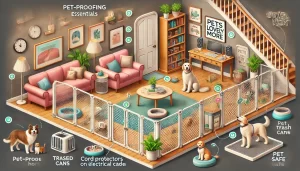
Bathrooms present a different but equally serious set of hazards. Medications left on countertops, toilet bowl cleaning tablets, razors, and even standing water in bathtubs can endanger pets — particularly smaller breeds or kittens, who are far more vulnerable than their size suggests. The ASPCA’s Animal Poison Control Center consistently lists human medications as one of the top causes of pet poisoning calls. Keep toilet lids closed, store all medications in latched medicine cabinets, and remove hair ties or rubber bands from accessible surfaces. Living rooms carry their own risks: exposed electrical cords that dogs and cats love to chew, unstable bookshelves, small decorative objects that can be swallowed, and certain houseplants that are toxic to animals. Swapping toxic houseplants for non-toxic plants like spider plants, Boston ferns, or areca palms is a simple change that makes a real difference for indoor pet safety.
Choosing Pet-Safe Furniture and Decor
Picking the right furniture and decor is central to building a genuinely pet-friendly home. You need to balance aesthetics with practicality — a harder trade-off than most design guides admit. For upholstery, tightly woven fabrics like microfiber, canvas, and outdoor-grade performance fabrics resist scratching, chewing, and staining far better than delicate materials like silk, velvet, or loosely woven linen. Leather and faux leather are popular with dog owners because they resist odors and wipe clean easily, though homes with cats prone to scratching may want to think twice. Many furniture manufacturers now explicitly market pet-safe furniture, designing pieces with reinforced legs, stain-resistant coatings, and removable washable covers that make upkeep much easier. Brands aligned with the PetSafe ecosystem also offer accessories like claw guards and furniture deterrent sprays that protect your investment without harming your animals.
Beyond upholstery, structural stability is a critical safety factor that many pet owners miss entirely. Tall bookshelves, freestanding lamps, and unsecured dressers can topple when large dogs or climbing cats make contact — and the injuries can be serious. Wall-anchoring tall or top-heavy pieces is a technique borrowed from childproofing, and you should apply it here too. For decor, the core rule is simple: keep fragile, sharp, or toxic items well out of reach. Skip decorative items made from materials that splinter, and go with pet-friendly choices like washable rugs with non-slip backings, rounded-edge coffee tables, and cord management systems that hide electrical cables. Consulting an animal behaviorist can give you tailored insight into your specific pet’s habits, helping you make smarter furniture and decor decisions that reflect how your animal actually moves through the space.
Creating Safe Outdoor Spaces
A standard 6-foot wooden privacy fence contains most medium and large dog breeds, but fence height alone won’t guarantee outdoor pet safety. Dogs dig under fences, and cats can scale almost any vertical surface. Inspect your perimeter fence every spring for rot, loose boards, and gaps wider than 2 inches. For determined diggers, the Humane Society recommends burying a wire apron or concrete footer at least 12 inches below the fence line to block escape tunnels. Cats need extra deterrents — roller bars along the top of the fence or an inward-angled overhang that disrupts their climbing path.
Yard plants deserve the same scrutiny you apply indoors. The ASPCA’s full toxic plant database lists sago palm, oleander, and azalea as particularly dangerous to both dogs and cats. Sago palm ingestion alone can cause fatal liver failure within 24 to 48 hours. Walk your yard and photograph every plant, then cross-reference each one against that list. Remove confirmed hazards right away and replace them with non-toxic options like marigolds, snapdragons, or sunflowers.
Water Features, Chemicals, and Outdoor Hazards
Backyard pools pose a serious drowning risk, especially for brachycephalic breeds like bulldogs and pugs that struggle to swim. Install a dedicated pool fence with a self-latching gate, and consider a pool alarm like the Safety Turtle 2.0 wearable alert system, which triggers within seconds of water submersion. Even small decorative ponds can be dangerous for puppies and kittens. Add a mesh cover or surround shallow features with large stones that give a pet firm footing to exit safely.
Lawn and garden chemicals are among the most underestimated outdoor pet hazards — a category that gets far less attention than it deserves. Organophosphate-based pesticides and cocoa mulch are both toxic to dogs. Scott’s Turf Builder, for example, contains iron and nitrogen compounds that can cause gastrointestinal distress if ingested before drying. Always read label drying times and keep pets off treated surfaces for the full recommended period, typically 24 to 72 hours. Store all fertilizers, herbicides, and insecticides in a locked shed rather than an open garage shelf a curious dog can reach.
Pet Safety Measures for Special Conditions
Senior pets lose muscle mass and joint flexibility, which turns ordinary household features into real obstacles. A dog with canine osteoarthritis needs non-slip flooring throughout the home, not just in high-traffic areas. Ortho Dog and Zymox both make joint support products, but environmental changes matter just as much as supplements. Place orthopedic foam ramps near sofas and beds so arthritic dogs skip the impact of jumping. Use rubber-backed bath mats on hardwood or tile floors in every room the pet uses — not only the bathroom.
Pets with epilepsy need a specific set of home modifications. Remove furniture with sharp corners near areas where a dog typically rests, since a seizure can send them into hard surfaces without warning. Block staircase access with baby gates during unsupervised periods. The PetSafe Deluxe Telescoping Gate is a solid hardware-mounted option that holds up under pressure without flexing. Keep a seizure log and photograph your home layout to share with your veterinarian, so they can offer targeted advice at check-ups.
Accommodating Visually Impaired and Anxious Pets
Blind or visually impaired pets navigate primarily through scent and spatial memory. Avoid moving furniture once a visually impaired pet has mapped the home. Place textured mats like coir or sisal at the top and bottom of every staircase to serve as tactile warning signals. Use scent markers — a small drop of lavender oil on a cotton ball near doorways — to help blind pets orient themselves without relying on sight.
Anxious pets, particularly dogs diagnosed with separation anxiety, do better with a structured safe room. Choose a room with no electrical cords, no toxic plants, and no small objects. Equip it with a white noise machine, a covered crate lined with worn clothing carrying your scent, and a long-lasting chew like a Kong filled with frozen peanut butter. Consulting a certified animal behaviorist through the International Association of Animal Behavior Consultants can help you build a desensitization plan alongside your physical pet-proofing strategy. Pet insurance plans from providers like Trupanion or Nationwide can offset the cost of behavioral consultations, which often run between $150 and $300 per session.
Essential Tools and Products for Pet-Proofing
Hardware-mounted baby gates from brands like Cardinal Gates and PetSafe form the backbone of any solid pet-proofing setup. Pressure-mounted gates are convenient, but a determined large dog can push them right out. Use hardware-mounted versions at the top of stairs and kitchen entrances. The Regalo Easy Step Walk-Through Gate fits doorways between 29 and 39 inches wide and handles up to 200 pounds of pressure. For wider openings, the Carlson Extra-Wide Walk-Through Gate with Pet Door stretches to 49 inches and includes a small pass-through for cats.
Cabinet Locks, Cord Management, and Storage Solutions
Magnetic cabinet locks outperform adhesive strap locks for pet-proofing lower cabinets. The Vmaisi Magnetic Cabinet Lock system uses a concealed magnet to release the lock — leaving no visible hardware that a clever dog can figure out over time. Install them on every cabinet holding cleaning products, medications, or food. Use at least two locks per double-door cabinet to stop a pet from prying the doors apart.
Electrical cord management is non-negotiable in any home with a pet that likes to chew. The CritterCord Cord Protector is a split loom tube infused with a bitter citrus scent that puts dogs and cats off immediately. For larger cable bundles behind entertainment centers, a cable management box like the D-Line Cable Tidy Unit encloses power strips inside a hard plastic shell. Apply bitter apple spray — available from Grannick’s or Fooey — directly to cords that can’t be covered, and refresh it every two to three days.
Cleaning Products and Monitoring Technology
Pet-friendly cleaning products cut the risk of toxic residue on surfaces your pet walks across and then licks off their paws. Branch Basics Concentrate and Better Life All-Purpose Cleaner are both free from phosphates, chlorine, and synthetic fragrances that can irritate a pet’s respiratory tract. Avoid any cleaner containing benzalkonium chloride (which the ASPCA flags as a common cause of oral ulcers in cats exposed to freshly cleaned surfaces).
Monitoring technology adds a critical layer of hazard prevention beyond physical barriers alone. The Furbo 360 Dog Camera includes a treat-tossing function and a barking alert that pings your smartphone when your dog is distressed. Place cameras at floor level to capture your pet’s actual vantage point so you can see exactly which barriers are holding and which spots need work. Combining physical tools with digital monitoring builds a layered approach that covers every corner of your home.
Training Pets to Avoid Hazards
The “leave it” command is the single most effective verbal cue for steering a pet away from dangerous objects. Start training with low-value items, then work up gradually to more tempting hazards like electrical cords or household chemicals left temporarily within reach. The American Kennel Club recommends practicing “leave it” in five-minute sessions three times daily for at least two weeks before expecting reliable results in high-distraction environments.
Boundary training uses physical markers and consistent reinforcement to teach pets which areas are off-limits. Place a strip of double-sided tape or a textured mat like the ScatMat Indoor Pet Training Mat at the edge of restricted zones. Cats and dogs both dislike the sensation underfoot and will self-correct after a few encounters. Pair this with a verbal cue like “off” or “back” so the pet eventually responds to the word alone, even after the mat is gone.
Certified animal behaviorists affiliated with the International Association of Animal Behavior Consultants recommend using management tools alongside training, never as a replacement for it. A baby gate keeps a dog out of the kitchen today, but a trained “boundary” response keeps that dog safe when the gate gets accidentally left open. Reinforce correct behavior with high-value treats immediately — within two seconds of the desired action — to build a clear association. Punishment-based corrections tend to create anxiety and make pets more erratic near hazards, not more cautious.
Cost Breakdown and Budgeting for Pet-Proofing
A full pet-proofing setup for a standard three-bedroom home typically runs between $200 and $600, depending on room count, your pet’s size, and the products you choose. Baby gates are the biggest single expense — hardware-mounted models from PetSafe range from $45 to $120 each. Budget for at least two to three gates if you have an open floor plan or multiple stairwells. Cabinet locks, cord protectors, and bitter deterrent sprays together add another $50 to $100 on top of that.
Technology-based monitoring adds optional but worthwhile cost. A single Furbo 360 Dog Camera retails at about $149, while two Wyze Cam v3 units come in under $80 combined. Pet insurance from providers like Healthy Paws or Trupanion runs between $30 and $80 per month depending on breed and age, but it offsets the financial hit of an injury that slips past your physical barriers. The ASPCA Animal Poison Control Center charges a $95 consultation fee per incident — a cost that becomes a non-issue if your storage solutions block access to toxins from the start.
Tackle the highest-risk areas first. Kitchens and garages hold the most concentrated hazards, so put about 40 percent of your budget there. Spread the remaining 60 percent across living areas, bathrooms, and outdoor perimeters.
Maintaining a Pet-Proofed Home
Set a recurring calendar reminder every 90 days to do a full walk-through of every pet-proofed area in your home. Physical barriers wear out, adhesives lose grip, and pets grow more capable of bypassing obstacles they once ignored. A quarterly audit catches these gaps before they become emergencies. Walk through each room at your pet’s eye level — crouching down completely — to spot hazards that are invisible from a standing position.
Seasonal Updates and Routine Checks
Each season brings new hazards that need targeted adjustments to your pet-proofing setup. Winter brings antifreeze, holiday plants like poinsettia and mistletoe, and heavier use of space heaters. Summer introduces pesticides, fertilizers, and open windows or doors that create escape risks. The ASPCA’s toxic plant database lists over 400 plants dangerous to cats and dogs. Cross-reference it every spring before adding new plants to your home or garden.
Check all cabinet locks and gate hardware monthly for loosening screws or worn latch mechanisms. Magnetic locks can lose holding strength when the mounting adhesive degrades. Tighten all hardware-mounted gate screws with a Phillips-head screwdriver every 60 days. Replace bitter deterrent sprays like Grannick’s Bitter Apple every three weeks, since the scent dissipates and loses effectiveness. Keep a dedicated pet-proofing supply bin stocked with replacement products so you can fix wear immediately rather than waiting for your next shopping trip.
Adapting as Your Pet Ages
A puppy’s hazards differ significantly from those facing a seven-year-old dog or a senior cat. Young animals chew, climb, and squeeze through gaps that older pets ignore entirely. Senior pets face a different set of risks — slippery floors that cause joint injuries and low furniture edges that become hard to navigate.
Revisit your pet-proofing strategy after any significant life change: moving to a new home, adopting an additional pet, or renovating a room. A new rescue dog may have chewing behaviors your current pet never displayed. Renovations expose raw wiring, open paint cans, and construction debris that need temporary but immediate hazard prevention. Treat pet-proofing as a living system that evolves with your household rather than a one-time project with a fixed endpoint. Consistent attention to your home’s safety conditions is the most reliable way to give your pets a long, healthy, and injury-free life indoors.
Frequently Asked Questions
How do I know if my home is fully pet-proofed?
Get down to your pet’s eye level and do a room-by-room walkthrough — most hazards are completely invisible from standing height. Look for accessible cords, unsecured cabinets, toxic plants, and gaps behind appliances. The ASPCA’s toxic plant and househo
ld hazard checklists are worth printing out and carrying with you as you go. Run this inspection every 90 days, since seasonal changes and new purchases can introduce hazards you wouldn’t otherwise notice.
How long does it take to train a dog to avoid household hazards?
Most dogs respond reliably to commands like “leave it” and “boundary” after four to six weeks of daily five-minute training sessions. Your results will vary based on your dog’s age, breed temperament, and whether every household member reinforces the same commands consistently (inconsistency is where most training efforts fall apart). Pair verbal training with physical barriers during the learning period. That gives your dog a safe space to practice the right behavior while the habits take hold.
Are childproofing products effective for pet-proofing too?
Cabinet locks, outlet covers, and door knob covers all cross over well from childproofing to pet-proofing. That said, pets bring challenges that child-specific products don’t always account for — a dog can push through a pressure-mounted gate, and a cat can clear most standard barriers without breaking a sweat.
How much should I budget annually for maintaining pet-proofing?
Set aside between $75 and $150 per year for replacement supplies like deterrent sprays, worn cabinet lock components, and updated cord protectors. Every two to three years, budget for one larger purchase if a gate or camera system needs replacing. Adding pet insurance alongside these physical measures takes the financial sting out of any accident that slips through your barriers.
Do indoor cats need the same level of pet-proofing as dogs?
Indoor cats need a different approach to pet-proofing — but no less thorough than what you’d do for a dog. Cats climb to high shelves and countertops, squeeze behind appliances, and chew on plants and cords at heights dogs never reach. Secure tall bookshelves to the wall with anti-tip furniture straps. Swap out any toxic houseplants for cat-safe alternatives from the ASPCA’s approved list, and use cord management boxes on countertops and desks where cats like to jump.
Can pet-proofing measures stress out my pet?
Barriers and deterrents introduced too quickly can temporarily spike a pet’s anxiety — especially in animals already prone to stress. Roll out new gates, mats, and restricted zones gradually over one to two weeks, using treats and praise to build positive associations with the new boundaries. If your pet shows persistent anxiety like excessive vocalization or destructive behavior, a certified animal behaviorist can help you adjust your approach so safety and your pet’s wellbeing aren’t working against each other.